
Review · TOKYO
Couple Plan
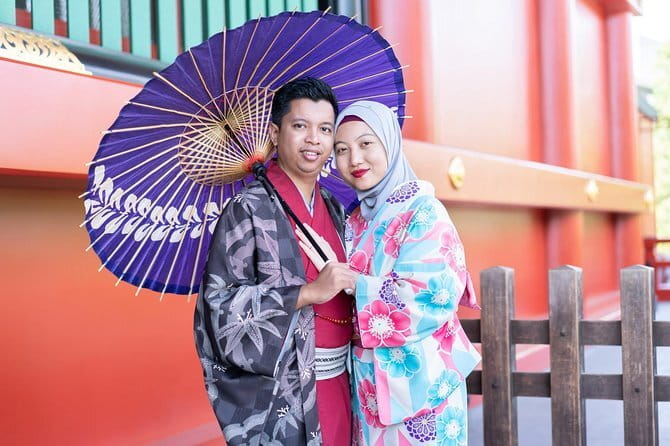
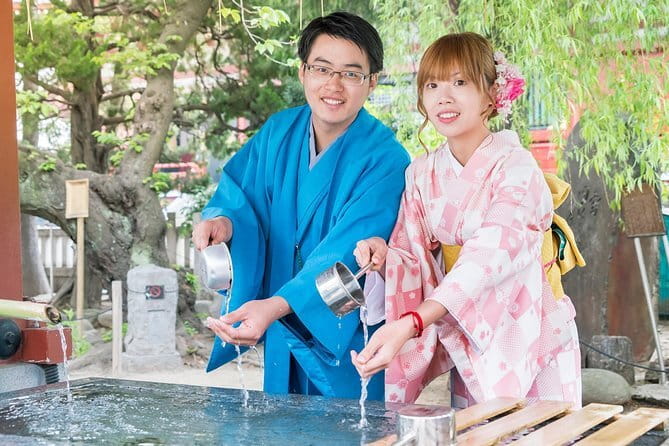
Tokyo feels different in a kimono. This two-hour experience puts you in Asakusa’s old-town streets, close to Sensoji Temple, Kaminarimon, and Nakamise shopping street. I like the large choice of more than 800 basic kimonos, and I like that English and Chinese are spoken in the shop. The main consideration is the strict, non-refundable booking policy.
The price is $109.02 per group of up to two people, which makes this a sensible choice for a couple who wants a polished cultural activity without paying for a full-day tour. You will need to return to the shop to change clothes, so the time available for strolling is limited.
Key points at a glance
- Three minutes from Asakusa Station: The shop is easy to reach and close to Sensoji Temple, Kaminarimon, and the surrounding shopping streets.
- More than 800 basic kimonos: You can choose from many colors and patterns, with staff available to help if you are unsure.
- Professional dressing and hair styling: Experienced dressing teachers and hairdressers handle the transformation.
- Seasonal kimono choices: Different weights are offered as the weather changes, making the outfit more practical throughout the year.
- Useful accessories included: Every package includes sandals and a handbag, with more ornate bags available for an added charge.
- Small maximum group: The activity accepts no more than 10 people, which should make the fitting process more manageable than a large shop experience.
Why Asakusa is the right setting for a kimono
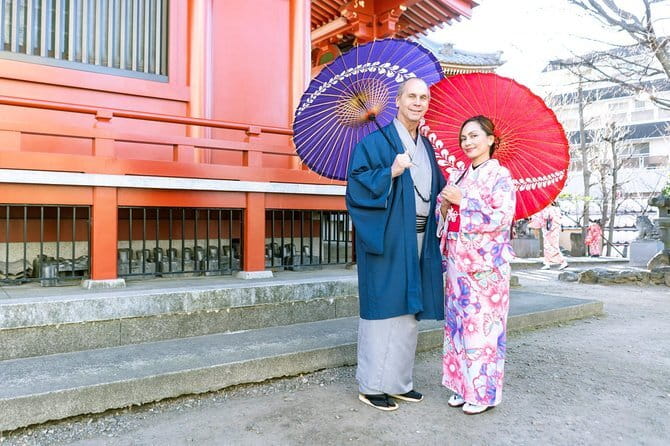
Asakusa is one of Tokyo’s best areas for connecting a traditional outfit with a traditional setting. The neighborhood preserves the feel of Edo Shitamachi, the old downtown part of Tokyo, with temple grounds, shopping lanes, and busy pedestrian streets.
The focus of this activity is not a long guided lecture. Instead, you dress in a kimono and then walk through the area at your own pace. That makes the experience simple, visual, and easy to fit into a busy Tokyo day.
Sensoji Temple is the main landmark nearby. It is described as Tokyo’s oldest temple and draws around 30 million visitors each year. The famous Kaminarimon, or Thunder Gate, gives you an especially recognizable starting point for photographs, while Nakamise shopping street leads toward the temple with shops and food stands.
I like this setting because you are not being taken to an isolated cultural center. You are wearing the clothing in the same neighborhood where many people come to see historic Tokyo. The result should feel more connected to the city than a costume fitting kept indoors.
More Romantic Experiences around the world:
- Romantic Venice: 30 Minute Gondola Ride with Serenade
★ 3.5 · 2,742 reviews - Paris: Romantic Cruise with 3-course Dinner on Seine River
★ 4.3 · 2,295 reviews - Vienna: Romantic Old Town 2-Hour Discovery Tour
★ 4.7 · 816 reviews
Arriving at Kimono Rental Asakusa Aiwafuku Shop No. 2
The shop is at Relink KAMINARIMON, 4th floor, 2-17-9 Kaminarimon, Taito City, Tokyo 111-0034. It is about a three-minute walk from Asakusa Station, which is helpful when you are carrying bags, managing a tight sightseeing schedule, or meeting someone who does not know the neighborhood well.
The experience begins and ends at this same shop. You should plan your route carefully, since the return visit is part of the two-hour booking. This is not a point-to-point tour that leaves you at Sensoji or Tokyo Skytree.
The location is useful for combining activities. After changing into your kimono, you can reach Sensoji, Kaminarimon, and nearby streets without arranging another taxi or train ride. Tokyo Skytree is also described as convenient to visit from the shop, though the activity itself does not include transportation or admission there.
A mobile ticket is provided, so keeping your booking available on your phone should make arrival straightforward. Confirmation is sent within 48 hours, subject to availability. Since the booking cannot be changed or refunded, check your date carefully before paying.
Choosing from more than 800 kimonos
The large selection is one of the strongest features here. The shop prepares more than 800 basic kimonos, giving you a real chance to choose a color or pattern that suits you rather than simply accepting the first available outfit.
That choice matters because a kimono becomes part of your time in Asakusa. You may want something bright for photographs, something more subdued for temple visits, or a pattern that works well with your companion’s outfit. Staff can offer suggestions if you are not sure which style looks best.
The selection is not unlimited luxury fashion. The description refers to basic kimonos, while classic and more ornate handbags cost extra. It is best to think of the included outfit as a practical rental package with room for personal choice, not as a private designer fitting.
The shop also changes the thickness of the kimonos by season. That is an important detail in Tokyo, where summer heat and winter cold can change the comfort of a street walk. The exact seasonal choices are not specified, so you should ask the staff what is suitable when you arrive.
The dressing process and hair styling
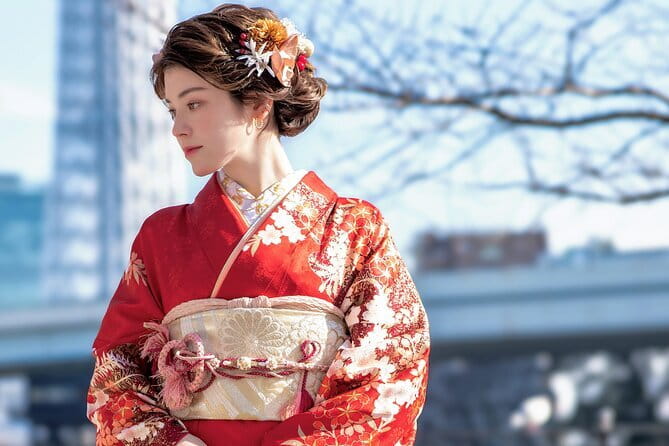
After you select your kimono, experienced dressing teachers help put everything in place. Traditional clothing has more layers and details than an ordinary dress or jacket, so professional assistance is useful even if you have worn a kimono before.
The shop provides all basic items needed for kimono dressing. You do not need to arrange the core outfit separately, and sandals and a handbag are included in the package.
Hairdressers are also available to create a finished look. The information does not specify the exact hairstyles, styling tools, or time required, so you should ask what is available before making any extra plans. Still, including hair assistance gives the outing a more complete feel than renting clothing alone.
English and Chinese are spoken by staff. That can remove much of the uncertainty during clothing selection and dressing, especially when you want advice about patterns, seasonal weight, accessories, or the fitting process.
One practical point is timing. The total activity lasts about two hours, and dressing, hair styling, walking, and changing back all fit inside that window. You should not expect a long period of sightseeing in the kimono. Arrive ready to make choices, and keep your walk close to the shop.
Same place, a slower evening:
- Dubrovnik: Romantic Sunset Cruise & Cave Visit with a Local
★ 4.7 · 611 reviews - Romantic Sunrise Balloon Tour in Majorca
★ 5.0 · 466 reviews - Santorini: Romantic Sunset Caldera Cruise with Dinner
★ 4.1 · 457 reviews - Mr Sanchos Romantic Day Beach Pass for Two
★ 5.0 · 419 reviews
Walking toward Kaminarimon and Sensoji
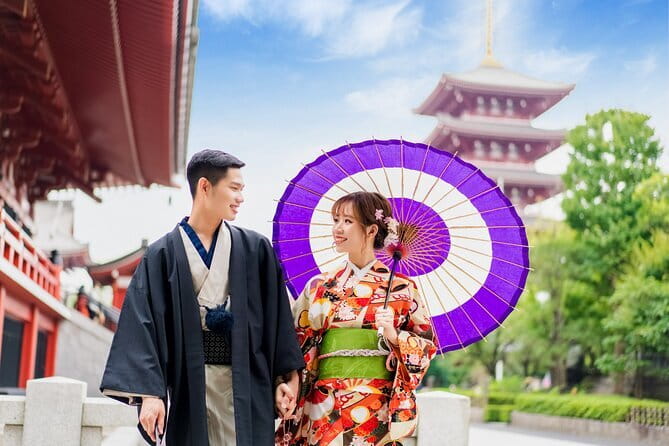
Once dressed, you can head toward Kaminarimon, the large Thunder Gate associated with Asakusa. This is one of the clearest places to begin because it gives you an immediate sense of the district and a strong background for photos.
From there, Nakamise shopping street leads toward Sensoji Temple. The street is an important part of the Asakusa experience, not just a route between two sights. It links the gate and temple while giving you a chance to browse the area in traditional clothing.
You will need to manage your own pace and route. No guide, commentary, or planned walking circuit is included in the supplied details. That freedom is useful if you want to stop for photos, browse shops, or take a quiet look around the temple grounds. It is less suitable if you want someone to explain every building or lead you to specific photo spots.
Sensoji is the natural centerpiece. Its age and scale give the walk a sense of place, and wearing a kimono here makes the activity feel connected to the setting. At the same time, the temple area attracts enormous numbers of visitors, so you should expect a popular sightseeing district rather than a quiet private visit.
The wording of the experience also encourages you to join events in Japan while dressed in kimono. No particular event is included or guaranteed, so treat that as a suggestion for adding your own plans rather than part of the package.
Accessories, sandals, and optional handbags
Sandals and a handbag are included for each rental. That saves you from having to match or carry separate accessories, and it means the basic outfit is ready for a short walk once the dressing is finished.
The shop also offers classic and more ornate handbags for an added charge. This is a useful option if accessories matter to you, but you should ask about the surcharge before choosing one. The base price does not include every upgraded item.
Footwear is worth considering because the activity involves walking around Asakusa. The exact sandal design and comfort level are not provided, so sensible planning means keeping the walk close to the shop and avoiding a packed schedule afterward.
The experience is best treated as a cultural outing rather than a full day in traditional clothing. A short route to Kaminarimon, Nakamise, and Sensoji fits the stated duration better than trying to cover many parts of eastern Tokyo.
What the $109.02 couple price delivers
At $109.02 for up to two people, the cost works out to about $54.51 per person if both places are filled. For a couple, that is a fair price when you value dressing help, hair styling, sandals, a handbag, and access to a large kimono selection.
The value is strongest for people who want the complete look without arranging each part separately. You receive the clothing, basic accessories, professional dressing, and hair assistance in one short appointment.
The price is less attractive if you only want to borrow a kimono for a few photographs and do not care about the fitting service. The experience is also not a guided temple tour, so you are paying for preparation and the cultural setting rather than expert sightseeing commentary.
Optional handbags can increase the final cost. Since the package includes a standard handbag, you can keep the price controlled by skipping the upgraded accessories.
The small maximum of 10 people is another quiet value point. It does not guarantee a private appointment, but it limits the size of the activity and should help keep the fitting process more orderly than a very large group booking.
What the two-hour schedule really means
The approximate two-hour duration includes the full visit, not two hours of walking. Your time is divided among arrival, kimono selection, dressing, hair styling, the walk through Asakusa, and changing back into your own clothes.
I would plan for a compact route. Kaminarimon, Nakamise, and Sensoji are the most obvious choices because they are close and fit the purpose of the outing. If you add Tokyo Skytree, you may have very little time left for the kimono walk, and the activity does not include transportation or entry.
The experience ends back at the rental shop. You must return the kimono and change clothes there, so keep your phone, wallet, and other personal items organized during the outing. The supplied information does not state whether storage is available, so ask the staff when you arrive.
Because the booking is non-refundable and cannot be amended for any reason, this is best for a firm Tokyo schedule. Do not book it as a flexible backup plan.
Who will enjoy this experience most
I would recommend it most strongly to couples who want a shared photograph-friendly activity in a famous Tokyo neighborhood. The couple plan keeps the price clear, and choosing outfits together can be part of the fun.
It also suits first-time visitors who want a gentle introduction to kimono without committing to a full cultural workshop. You receive help from professional dressers, and English or Chinese support can make the process less stressful.
Families and small groups may also find it useful, since the activity accepts up to 10 people. The price information provided is specifically for a group of up to two, so larger groups should confirm the correct arrangement before booking.
This may not suit you if you want a long guided tour, a quiet temple visit, or a full day of sightseeing in traditional clothing. The experience is short, self-directed, and built around dressing plus a nearby walk.
What the feedback tells me about service
The strongest praise centers on politeness, kindness, and the atmosphere inside the shop. One customer described the price as very low and the experience as complete from start to finish, with particular pleasure in wearing the kimono.
Another customer reserved through the shop’s website to receive a small discount and avoid waiting in line. When plans changed, the reservation date was adjusted quickly. That suggests the staff can be responsive before the appointment, although the formal booking terms here remain strict and do not allow refunds or amendments.
The overall rating is 5 from two recorded ratings. That is encouraging, especially for service and friendliness, but it is still a small sample. I would put more weight on the specific practical points: polite staff, a pleasant atmosphere, clear communication, and quick handling of a date change before booking.
Should you book Kimono Rental Asakusa Aiwafuku Shop No. 2?
Book it if you want a short, polished kimono experience near Sensoji and prefer help with dressing and hair rather than managing the details yourself. The large selection, seasonal clothing, included accessories, and convenient station location give the $109.02 couple price solid value.
Before paying, confirm your date, remember that upgraded handbags cost extra, and keep your sightseeing route close to Asakusa. If you want guided history or several hours of walking, choose a different activity. If you want to look the part while exploring Tokyo’s old downtown, this is a practical choice.
FAQ
Where does the kimono experience begin?
It begins at Kimono Rental Asakusa Aiwafuku Shop No. 2, located at 4th floor, Relink KAMINARIMON, 2-17-9 Kaminarimon, Taito City, Tokyo 111-0034.
Where does the activity end?
The activity ends back at the same rental shop, where you return the kimono and change into your own clothes.
How long does the experience last?
The experience lasts approximately two hours.
How much does the couple plan cost?
The couple plan costs $109.02 per group of up to two people.
Is the ticket mobile?
Yes. A mobile ticket is provided.
How many people can join the activity?
The activity has a maximum of 10 participants.
Are sandals included?
Yes. Sandals are included in the package.
Is a handbag included?
Yes. A handbag is included. Classic and more ornate handbags are available for an additional charge.
Are staff able to speak English or Chinese?
Yes. Staff members are able to communicate in both English and Chinese.
Can the booking be cancelled or changed?
No. The experience is non-refundable and cannot be changed for any reason.
Just added around the world
- Zadar: Romantic Sunset Boat Tour with Champagne★ 4.9 · 11 reviews
- Weimar: Adventure Date, Walk with Quiz and Dinner for Couples★ 3.8 · 12 reviews
- Zakynthos: Romantic Sunset Tour & the Legend of the Dragon★ 5.0 · 4 reviews
- From Zadar: Romantic Sunset Sailboat Tour★ 5.0 · 5 reviews
- Anniversary & Destination Wedding Photo-shoot in Vienna★ 5.0 · 3 reviews
- Vienna: Johann Strauss 200th birthday anniversary exhibition★ 4.7 · 3 reviews
- Vienna: Professional Proposal Photographer★ 5.0 · 8 reviews
- Venice: Romantic Palace Dinner and Private Gondola Ride★ 4.7 · 6 reviews
Tokyo Romantic Experiences, compared.
Romantic Mizuhiki Knot and Omikuji Washi Charm Workshop Ueno
Read our review →
Browse the lists this tour appears in