
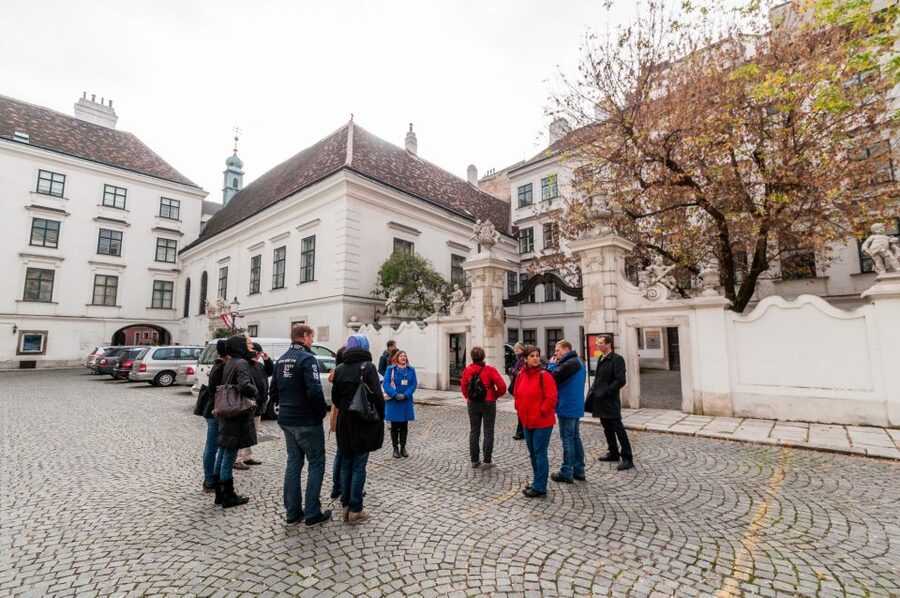
Review · VIENNA
Vienna: Romantic Old Town 2-Hour Discovery Tour
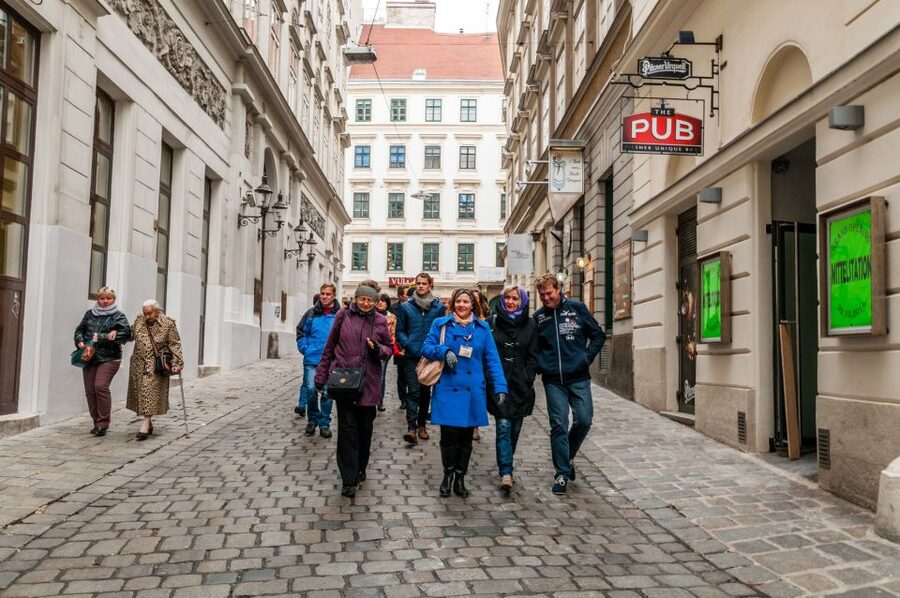
Vienna reveals itself in its side streets. This private two-hour walk goes beyond the postcard sights, using the Anchor Clock, Greek Quarter, old university district, and tucked-away courtyards to show how Vienna grew through trade, religion, politics, and architecture. I like the clear six-part theme, and I like that a private guide can adjust the pace and explain details you might miss alone.
The main consideration is time. Two hours is enough for a lively introduction, not a full tour of central Vienna. The route also focuses heavily on the old town, especially areas northeast of St. Stephen’s Cathedral, so you should not expect an all-purpose tour covering every famous sight.
Key points to know before booking
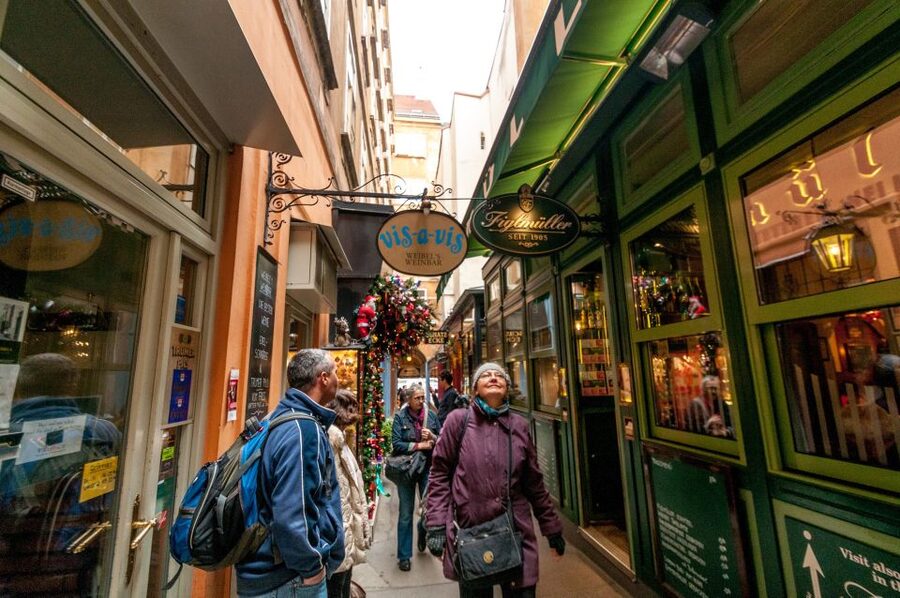
- The Anchor Clock is the starting point: You meet at Hoher Markt, where Roman, Jewish, commercial, and political stories overlap.
- The Greek Quarter gives the tour a different angle: Trade, Ottoman conflict, and Greek independence add layers beyond imperial Vienna.
- Six themes keep the walk focused: The route covers architecture, myths, the old university quarter, and narrow lanes as well as major history.
- It is private for up to seven people: The $352 group price becomes much better value when shared by a larger party.
- Guide quality matters here: Wolfgang Auinger earned especially warm praise for his charm, while Max was noted for clear, detailed, motivated guiding.
- Expect an urban history walk, not a food tour: Food and refreshments are not included, so plan your coffee or snack separately.
Starting at Hoher Markt and the Anchor Clock
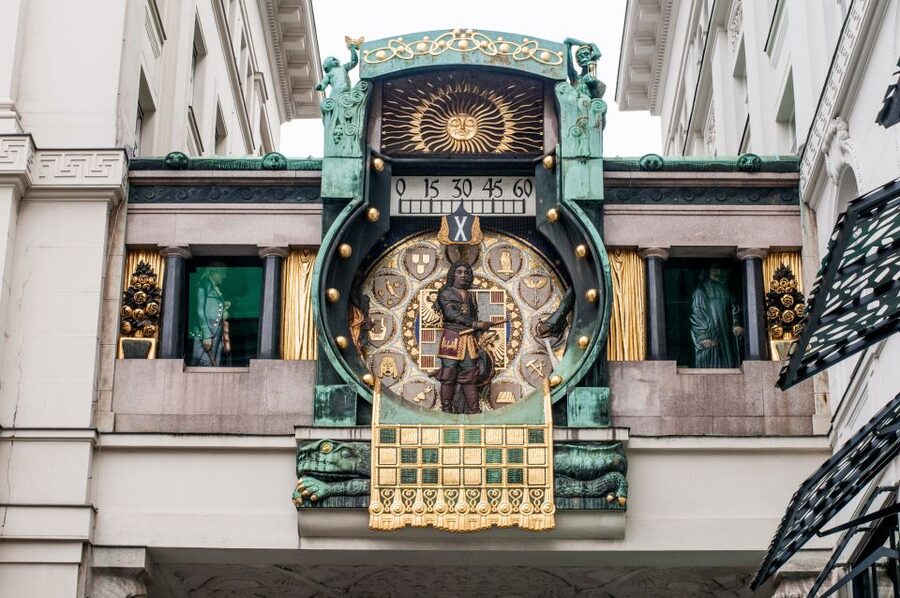
The meeting point is the Anchor Clock at Hoher Markt, in Vienna’s first district. Arrive 10 minutes early. This is a sensible starting place because the square brings several eras together before you have taken a single step.
Hoher Markt has attracted politicians, architects, tradespeople, and merchants over the centuries. Your guide uses it to introduce the first theme: Romans, Jews, and traders. That combination matters. Vienna’s center was not shaped only by emperors and grand palaces. Commercial life, religious communities, water supply, and civic power all helped form the streets you see today.
The Anchor Clock is the visual star here. It is famous for its moving figures and historical associations, but the point of the stop is not simply to take a photograph. The clock gives your guide a way to talk about Vienna’s past and the surprises built into the city’s public spaces.
You also learn about the oldest building in Vienna and the city’s first public waterworks. Those details help you read the square as a working part of an old city, rather than as a backdrop for the clock. I appreciate this kind of opening because it gets you looking at infrastructure and everyday needs, not only decorative façades.
One practical note: the tour begins outdoors and continues on foot through central streets. The supplied information does not specify the exact walking distance or terrain, so comfortable shoes are a sensible choice. You will also want to keep the group close to the guide in narrow lanes and busy areas.
More Two-Hour Experiences around the world:
- Heidelberg: City of Romance 2-Hour Walking Tour
★ 4.8 · 60 reviews - Private Romantic cruise with sparkling wine- 2-Hour- Lisbon
★ 4.9 · 52 reviews - Lisbon Private Romantic 2h Cruise with sparkling wine-Day/Sunset
★ 5.0 · 24 reviews
Entering Vienna’s Greek Quarter
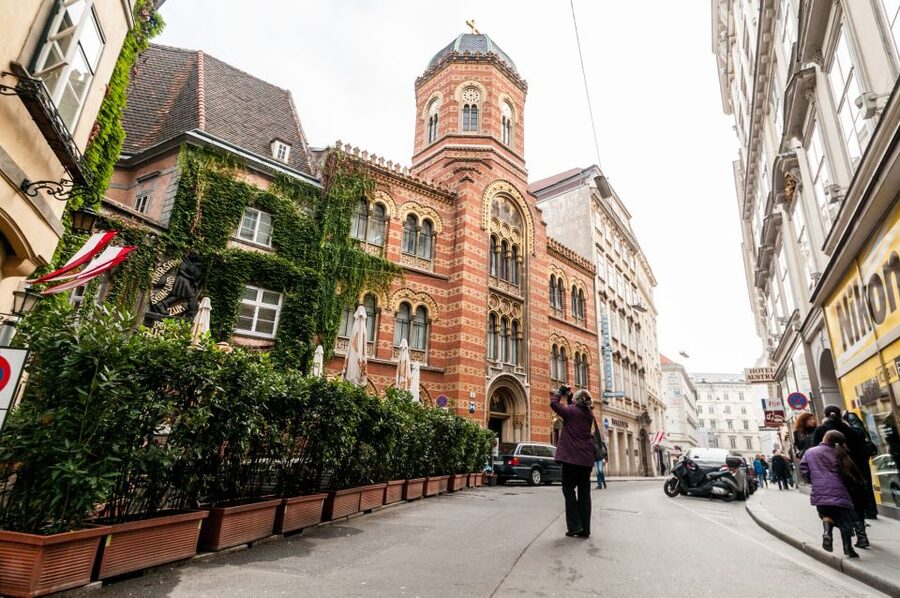
The second theme takes you into the Greek Quarter, around the innermost arm of the Danube. This part of Vienna developed through trade, and its story differs from the familiar imperial one.
Your guide connects the area with the Turks who fought here and with Greeks who prepared their struggle for independence here. That gives the neighborhood a useful sense of movement. People did not simply live inside Vienna’s walls. They traded, argued, worshipped, organized, and carried political ideas across borders.
For me, this is one of the strongest reasons to choose the tour. A short walk can easily become a parade of palaces and famous churches. The Greek Quarter adds a social and international side to Vienna, showing how the city was shaped by communities with ties beyond Austria.
The area is also described as hectic, which means you should expect a lively inner-city setting rather than a quiet museum-like visit. The tour does not include food or refreshments, so any stop for a drink or snack would be at your own expense and should not be assumed as part of the two-hour plan.
Reading Vienna through its architectural styles
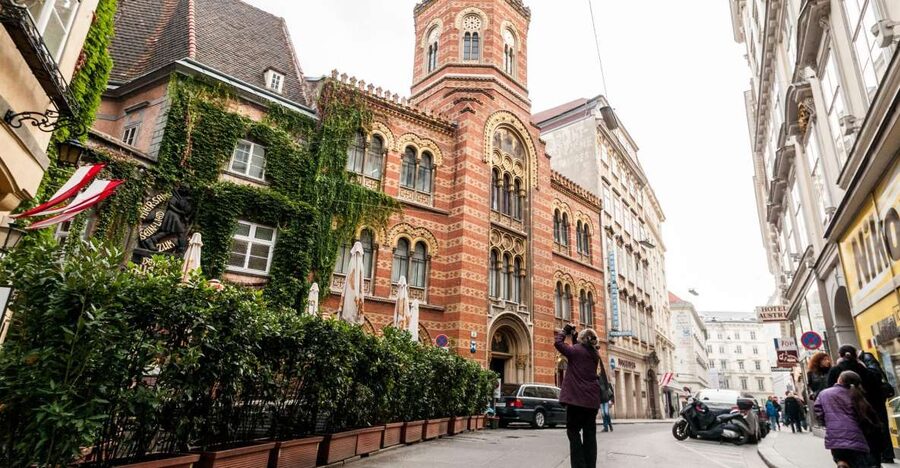
The third topic is architectural diversity. In a compact old town, your guide points out Gothic residential towers, medieval paving, Renaissance back courtyards, Baroque city palaces, Rococo rows of houses, grand Gründerzeit buildings, and Art Nouveau details.
That list is useful because Vienna’s architecture can blur together when you see it too quickly. A guide helps you sort the periods and notice how one style differs from another. You may find that a plain-looking passage or doorway becomes more interesting once you know when and why it was built.
The focus on back courtyards is particularly worthwhile. Grand façades get the attention, but courtyards reveal how buildings functioned behind the street front. They also make the city feel less like a formal imperial stage and more like a place where people lived and worked.
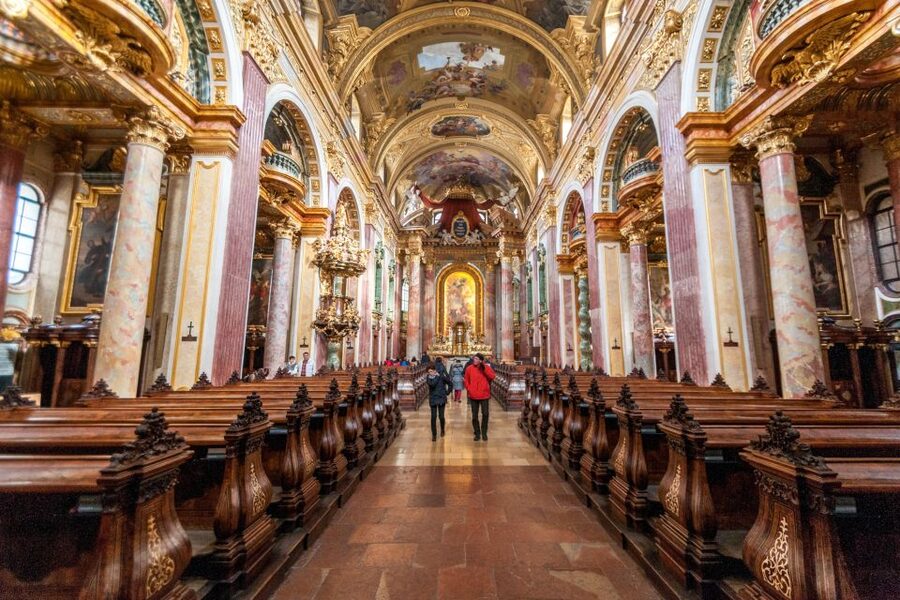
The tour does not promise entry into every building. Much of its value comes from what your guide can point out from public streets and squares. The Jesuit Church is specifically used for an interior view, but other buildings may be discussed from outside. If you want extensive indoor sightseeing, this tour may feel limited. If you want help understanding what you are already seeing, it earns its time.
Myths, animals, and the stories on façades
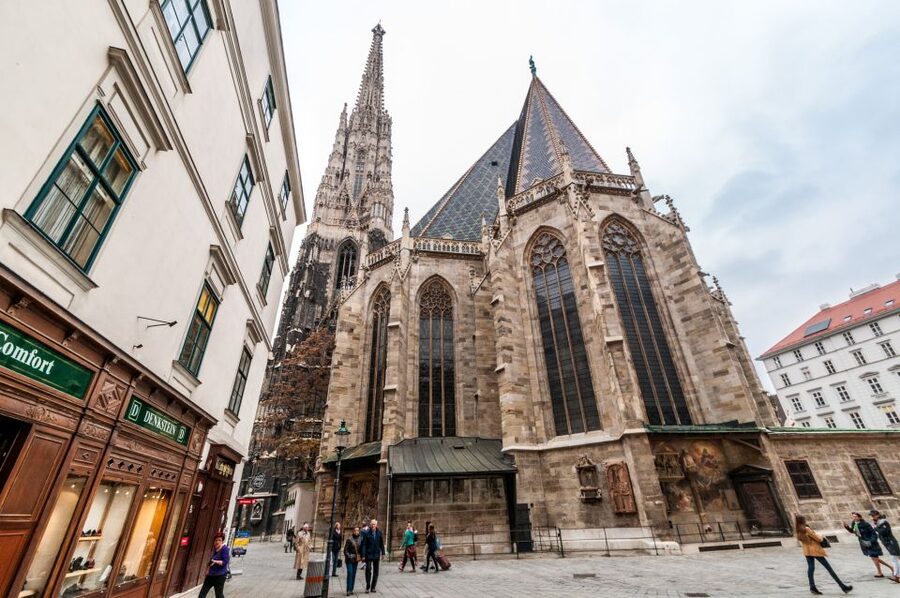
Vienna’s old center is full of stories that sit somewhere between fact and legend. The fourth theme explores myths and legends connected with the city, including the role of animals in local symbolism.
Look closely at façades and fountains during this part of the walk. Animals appear as ornaments and clues, and your guide explains how people used legends to make sense of the city and its past. Some stories may be historically accurate, while others belong more to tradition and imagination. That distinction is part of the fun.
I like this approach because it keeps history human. Dates and dynasties matter, but people also remember a place through tales, symbols, warnings, and odd little explanations. A story attached to a fountain or carved animal can make an otherwise easy-to-miss detail stay with you.
The tone may depend on your guide. One German-language booking described the walk as informative but felt the guide used more Viennese humor than solid historical explanation. That is a fair caution. If you prefer a tightly academic lecture, ask about guide style and language when booking. If you enjoy local character mixed with history, a bit of Viennese humor may be welcome.
More Romantic Experiences around the world:
- Romantic Venice: 30 Minute Gondola Ride with Serenade
★ 3.5 · 2,742 reviews - Paris: Romantic Cruise with 3-course Dinner on Seine River
★ 4.3 · 2,295 reviews - Dubrovnik: Romantic Sunset Cruise & Cave Visit with a Local
★ 4.7 · 611 reviews - Romantic Sunrise Balloon Tour in Majorca
★ 5.0 · 466 reviews
The Jesuit quarter and Vienna’s old university
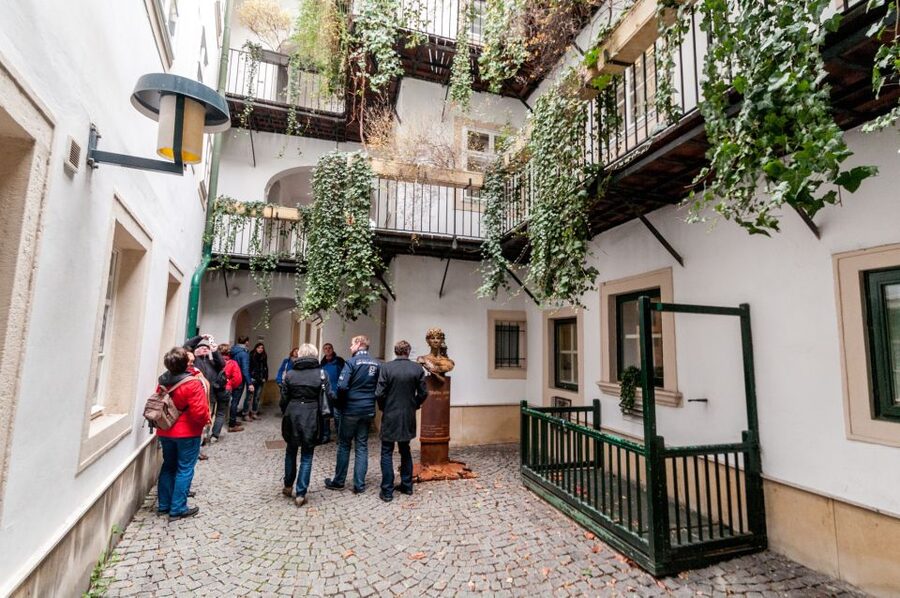
The fifth topic brings you to the old university quarter, a traffic-free area in the center of the old town. The Jesuit quarter is especially valuable because it connects education, religion, art, and power in one small section of the city.
At the square’s fountain, you can look into the Jesuit Church. The church interior is described as a display of Baroque exuberance, and your guide uses it to explain the power of the Church and the competition between painters and architects in Vienna.
That last point gives the visit more bite. Baroque churches were not only places for worship. They were also public statements, and the artists involved did not always agree about how architecture and painting should work together. Even if you are not an art specialist, you can appreciate the tension between structure, decoration, and visual drama.
The quarter is sealed off from traffic, which should make this section easier for listening and looking. Still, the tour is only two hours, so the church visit is part of a moving route rather than a long, quiet church study. You get a strong introduction, but you should not expect a detailed treatment of every artwork.
Narrow streets and back courtyards
The final theme turns toward Vienna’s winding lanes and hidden-looking interior spaces. The wording here is deliberately atmospheric, but the idea is practical: old streets were not designed for modern traffic, wide sidewalks, or easy navigation.
The tour uses these lanes to raise questions about medieval living conditions. Hygiene, drainage, crowding, and the simple act of opening a window all take on a different meaning when you picture daily life in an older city.
This is where the route’s six themes come together. Architecture tells you how buildings were made. Trade explains why people gathered in certain places. Religion and education show how institutions shaped the center. Myths preserve how people explained their surroundings. Narrow streets reveal what ordinary life may have felt like.
You may find the back courtyards more rewarding than another grand exterior. They are not necessarily dramatic, but they offer a closer look at the city’s scale and layout. The drawback is that exact access can depend on which spaces are open at the time. The supplied details do not promise entry into every courtyard, so treat them as places your guide may show or explain rather than guaranteed private visits.
What the two-hour format does well
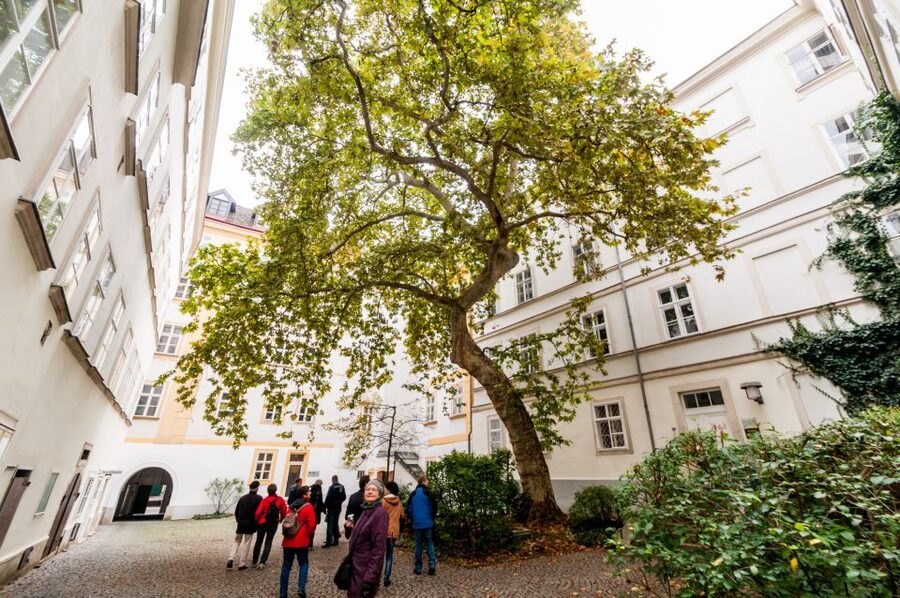
Two hours is a good length for an arrival-day introduction or a first morning in Vienna. You can learn the basic shape of the old town without giving up half a day. The six themes also prevent the walk from becoming a random list of monuments.
The trade-off is depth. You will move through several subjects quickly: Roman and Jewish connections, commerce, the Greek Quarter, architectural periods, legends, the Jesuit quarter, and medieval street life. I would think of this as a guided orientation with strong historical detail, not a specialist course.
That format suits you if you want to explore more confidently afterward. Once you know where the Greek Quarter, Hoher Markt, Jesuit quarter, and university district fit together, you can return to the places that caught your attention.
The tour is private for a group of up to seven people. That matters more than it might seem. You can ask questions without competing with a large crowd, and your guide can give more attention to your interests. A private group also makes the price easier to assess.
Is $352 a fair price?
The listed price is $352 per group, not per person, for up to seven people. With seven participants, that works out to about $50 per person. For two people, it becomes $176 per person, so the value depends heavily on group size.
You are paying for a private guide and a focused old-town walk. Food, drinks, and other personal purchases are not included. There is no separate admission cost identified for the walk, though the tour description only specifically mentions looking into the Jesuit Church rather than a broad program of paid interior visits.
For a family or group of friends, the arrangement can be practical. You get a guide to yourselves and avoid paying seven separate per-person rates. For a couple, the price is harder to justify unless you place a high value on private guiding or want a language and pace tailored to your needs.
The overall rating is 4.7 from 816 ratings, which points to consistently strong satisfaction. The strongest praise centers on guides who explain details well, show places you might not find alone, and bring warmth to the walk. Wolfgang Auinger is singled out as charming and engaging, while Max is praised for clear delivery and motivation. Those comments suggest that the guide is the central part of the value.
Language, pace, and guide style
Live guiding is offered in German, Spanish, Chinese, Dutch, English, French, Italian, Japanese, Portuguese, and Russian. Group tours also list Arabic and Korean, and you should contact the operator if you need another language or want to confirm a specific option.
Language availability matters on a detail-heavy walk. The tour relies on stories, architectural distinctions, and historical context, so comfortable listening will make a real difference. Ask about the language before you book rather than assuming every listed language is available at every start time.
Guide style can vary. One guide may lean toward polished historical explanation, while another may add local humor and personal color. That range is not automatically a problem, but it is worth considering if you have a strong preference.
The best fit is someone who enjoys asking questions and looking closely. The route is less suited to you if you want a fast checklist of famous sights or a long break for coffee. It is also not designed as a food experience.
Booking details that affect your day
You meet at the Anchor Clock, Hoher Markt, 1010 Vienna, and should arrive 10 minutes before departure. Starting times vary, so check availability for the date you want.
The experience offers free cancellation up to 24 hours before the start for a full refund. You can also reserve now and pay later, which helps if you are still arranging the rest of your Vienna schedule.
A private group is available, and the duration is two hours. The listing also describes skip-the-ticket-line access, although this is primarily a walking tour and the available information does not identify a major ticketed attraction where you would use that benefit. I would not choose the tour for that feature alone.
Who should book this Vienna walk?
I would recommend it to first-time visitors who want context before exploring on their own. It is also a good match for small groups who care about architecture, city history, legends, and less obvious corners of the center.
Families with older children may like the animal symbols and stories, while architecture fans will appreciate the quick comparison of Gothic, Renaissance, Baroque, Rococo, Gründerzeit, and Art Nouveau styles. People who have already seen St. Stephen’s Cathedral and the major imperial sights may value the Greek Quarter and old university district most.
You may want something else if you need a full-day history program, extensive church interiors, food tastings, or transport beyond the walking route. The tour gives you a compact look at central Vienna, but it cannot cover the whole city in two hours.
Should you book the Romantic Old Town Discovery Tour?
Book it if you want a private, story-led introduction to central Vienna and your group can share the $352 cost. The route has real variety: Hoher Markt, the Greek Quarter, architectural styles, legends, the Jesuit quarter, and narrow lanes all offer a different way to understand the city.
I would be especially inclined to book if Wolfgang Auinger or Max is available in your language, based on the strong praise for their clear and personable guiding. Confirm the language and guide before paying if those details matter to you.
Skip it if you prefer to spend two hours inside major museums or if your main goal is a broad tour of Vienna’s famous imperial sights. For everyone else, this is a useful old-town orientation with enough unusual detail to make the center feel less familiar and more alive.
FAQ
Where does the Vienna Old Town tour meet?
The meeting point is the Anchor Clock at Hoher Markt, 1010 Vienna. You should arrive 10 minutes before the tour begins.
How long does the tour last?
The tour lasts two hours. Starting times depend on availability for your chosen date.
How much does the tour cost?
The price is $352 for a group of up to seven people.
Is the tour private?
A private group is available. The experience includes a private guide.
Which languages are available?
Live guiding is listed in German, Spanish, Chinese, Dutch, English, French, Italian, Japanese, Portuguese, and Russian. Group tours also list Arabic and Korean. Contact the operator to request another language or confirm a specific option.
Are food and refreshments included?
No. Food and refreshments are not included in the tour price.
Can I cancel the booking?
Yes. You can cancel up to 24 hours in advance for a full refund. The booking also offers a reserve-now, pay-later option.
Just added around the world
- Zadar: Romantic Sunset Boat Tour with Champagne★ 4.9 · 11 reviews
- Weimar: Adventure Date, Walk with Quiz and Dinner for Couples★ 3.8 · 12 reviews
- Zakynthos: Romantic Sunset Tour & the Legend of the Dragon★ 5.0 · 4 reviews
- From Zadar: Romantic Sunset Sailboat Tour★ 5.0 · 5 reviews
- Anniversary & Destination Wedding Photo-shoot in Vienna★ 5.0 · 3 reviews
- Vienna: Johann Strauss 200th birthday anniversary exhibition★ 4.7 · 3 reviews
- Vienna: Professional Proposal Photographer★ 5.0 · 8 reviews
- Venice: Romantic sunset cruise on the Venice lagoon★ 3.8 · 3 reviews
Vienna Romantic Experiences, compared.

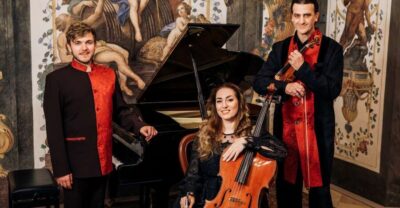
Romantic Classics Piano, Violin, and Cello Concert
Read our review →
Johann Strauss 200th birthday anniversary exhibition
Read our review →
Wine Tasting in a 600 year historical wine cellar
Read our review →Browse the lists this tour appears in