
Review · VIENNA
Vienna: Romantic Classics Piano, Violin, and Cello Concert
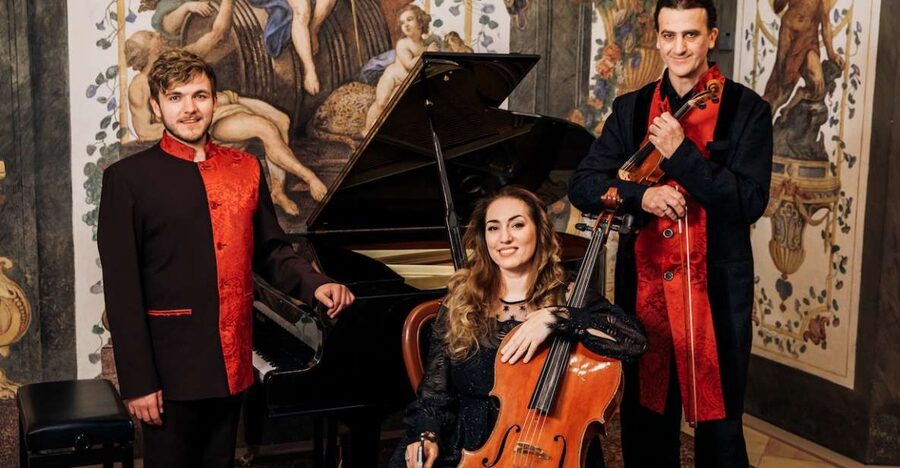
Vienna’s best seat may be a small one. This 90-minute Romantic Classics concert brings Beethoven, Mozart, Chopin, Liszt, Schubert, and Brahms into the frescoed Sala Terrena, only 150 meters from St. Stephen’s Cathedral. I like the close setting and the clear sound, two details that can make familiar music feel newly personal.
I also like the range of ticket choices, from student admission to seats near the performers. The main caution is practical: refreshments are not included, and any drinks available during the break require cash. Toilet signs can also be easy to miss.
Key points to know before booking
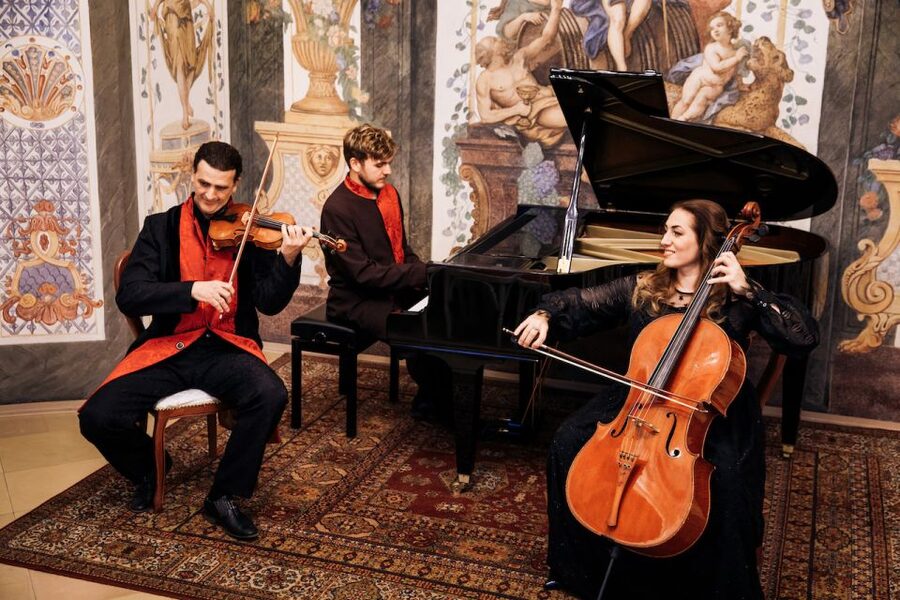
- The venue is close to St. Stephen’s Cathedral: Enter through the Deutschordenskirche gate, where the concert poster stand helps you find the right doorway.
- The Sala Terrena supplies the atmosphere: Its expressive frescoes and intimate size create a more personal setting than a large concert hall.
- The program covers several famous composers: Expect Beethoven’s Moonlight Sonata, Liszt’s Un sospiro, Chopin’s Nocturne in C minor, Schubert’s Trio in E-flat Major, and works by Mozart, Bach, Paganini, Saint-Saëns, Massenet, and Haydn.
- Three accomplished musicians are featured: Violinist Claudio Bentes, pianist Dushan Sretovic, and soloist Teodora Miteva are named among the performers.
- You can choose your level of proximity: Student, back-row, and closer seats are offered, so you can match the ticket to your budget and interest.
- The concert is wheelchair accessible: English and German are available, and an English or German host or greeter is on hand.
The Sala Terrena, a small room with a lot of character
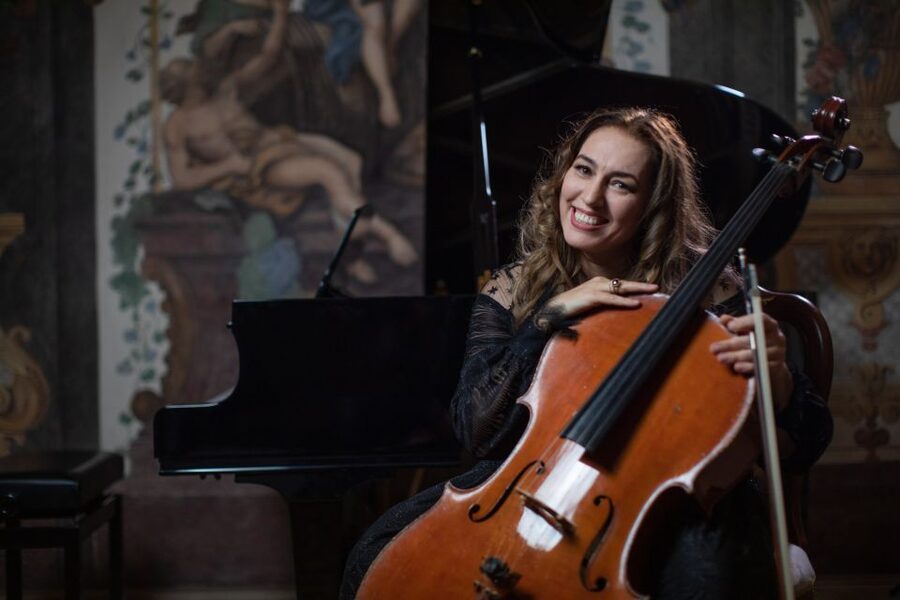
The setting does much of the work before the first note. The Sala Terrena is known here for its beautiful frescoes, and the room gives the performance a sense of place that a modern auditorium cannot match. You are not simply sitting in an anonymous concert space. You are hearing classical music inside a historic Viennese setting close to the city’s best-known cathedral.
The room is relatively small, which matters. The published feedback gives the acoustics high praise, with individual notes coming through clearly and with depth. In a space like this, you may notice the attack of a piano key, the change in pressure from a violin bow, or the low movement of the cello more easily than you would from the back of a large hall.
That closeness is also part of the charm. The musicians are near enough to watch their concentration and coordination. It makes the performance feel less formal and more direct, though anyone who prefers a grand concert-hall effect may find the room modest.
Finding the entrance should be simple if you use the correct landmark. The venue is 150 meters from St. Stephen’s Cathedral. Go to the gate at Deutschordenskirche, where you will also find a poster stand for concerts at Mozarthaus. Arrive 15 minutes before the start. That gives you time to locate the entrance, check your coat, and settle into the room without rushing.
More Concerts around the world:
- Paris: Romantic Piano Concert at Saint-Julien-le-Pauvre
★ 4.7 · 126 reviews - Bali/Benoa: 5-Course Romantic Evening Cruise With Live Music
★ 4.8 · 104 reviews - Your Romantic Dinner in Cancun, includes national open bar and live music
★ 4.5 · 37 reviews
How the Romantic Classics program unfolds
The program is carefully varied. It moves between piano pieces, solo strings, chamber music, and works known for their emotional force. You get famous melodies, but also shorter pieces that change the pace and texture of the evening.
Haydn opens with a Hungarian flavor
The program begins with Joseph Haydn’s Trio all’ungarese, Hob XV:25. Its listed sections are Andante, Poco Adagio, and the closing Rondo. This is a chamber work, so it gives you an early sense of how the instruments relate to each other rather than placing one performer alone in the spotlight.
The final Rondo brings a livelier finish to the opening work. It is a useful start because the musicians can establish their balance and timing before the program turns toward more familiar solo repertoire.
Beethoven brings two very different moods
Beethoven appears twice, first with the Moonlight Sonata, specifically its Adagio. This is one of the most recognizable piano movements in the classical repertory. Its slow, inward mood makes it a natural fit for a small room, where quiet passages can carry without being swallowed by a large acoustic.
Later comes Beethoven’s Sonata Op. 2, with the first movement marked Allegro con brio. The contrast is important. Instead of staying with the calm, reflective mood of the Moonlight Sonata, the program shifts toward speed and force. Hearing these two works in one evening lets you compare two sides of Beethoven without needing a long explanation from a presenter.
More Romantic Experiences around the world:
- Romantic Venice: 30 Minute Gondola Ride with Serenade
★ 3.5 · 2,742 reviews - Paris: Romantic Cruise with 3-course Dinner on Seine River
★ 4.3 · 2,295 reviews - Vienna: Romantic Old Town 2-Hour Discovery Tour
★ 4.7 · 816 reviews - Dubrovnik: Romantic Sunset Cruise & Cave Visit with a Local
★ 4.7 · 611 reviews
Mozart offers a lighter turn
Mozart’s La tartine de beurre, also known as Das Butterbrot, adds a playful change of tone. After the seriousness of Beethoven, this shorter piece gives the program a touch of humor and relief.
That kind of contrast helps the 90 minutes pass naturally. A concert made only of weighty, intense works can feel heavy. Mozart’s lighter selection keeps the evening from becoming too solemn.
Liszt and Chopin provide the romantic center
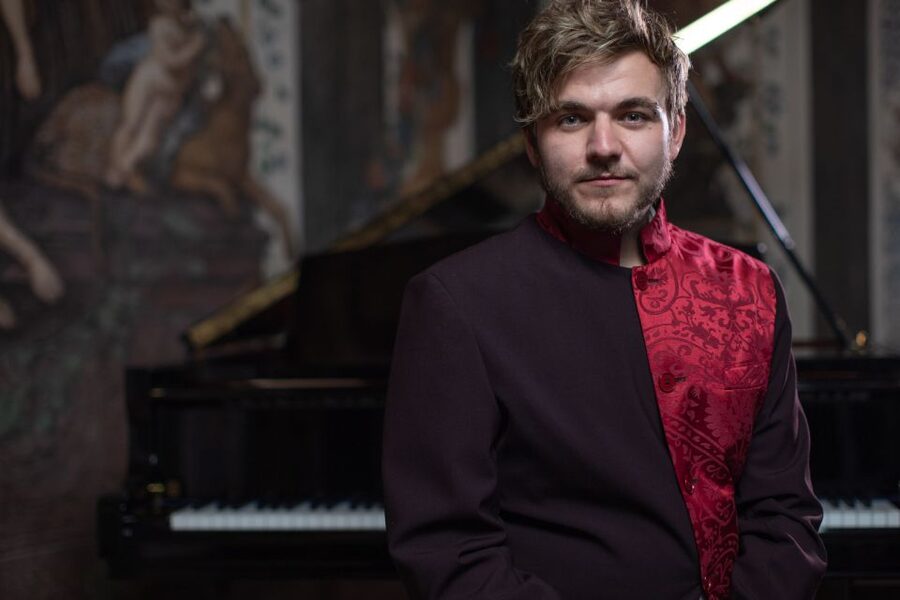
Franz Liszt’s Un sospiro is one of the evening’s central piano selections. The title suggests a sigh, and the piece is suited to the program’s focus on love and passion. It gives pianist Dushan Sretovic room to show the expressive side of his playing.
Sretovic is described as a multiple award-winning piano virtuoso who appears regularly on international stages, with a particular reputation for Chopin interpretations. That makes his place in this program especially relevant, since Chopin receives two substantial selections.
The first is the Nocturne in C minor, Op. 48 No. 1. It is followed by Chopin’s Étude Op. 10 No. 1 in C major. These pieces place very different demands on the pianist. The nocturne brings a more lyrical, reflective quality, while the étude gives the fingers a far more athletic task.
You may especially enjoy this portion if you want a concert that puts the piano at the center. You should also know that the program is not built around one extended Chopin recital. The Chopin pieces are part of a broader sequence that keeps changing instruments and mood.
Bach, Paganini, Saint-Saëns, and Massenet change the texture
The middle section adds several short works for solo strings. Johann Sebastian Bach’s Cello Suite in G Major, BWV 1007, specifically the Allegro, gives the cello a clear solo moment. Without a full ensemble behind it, the instrument’s phrasing and tone become the main event.
Niccolò Paganini’s Caprice No. 13 brings the violin into focus. This is a useful contrast with Bach’s cello selection. The program moves from the grounded, resonant cello to the more agile and exposed sound of a solo violin.
Claudio Bentes is named as the violinist for the concert. His role is particularly important in these solo selections, as well as in the chamber works that require close musical coordination.
Camille Saint-Saëns’ The Swan follows, offering a gentler mood. Jules Massenet’s Thaïs: Meditation adds another well-known lyrical selection. Both pieces are brief compared with a full sonata or trio, but they serve a practical purpose: they refresh the ear before the final chamber work.
Teodora Miteva is also featured as an outstanding soloist with numerous international competition wins. The available information does not assign every individual selection to a specific performer, so I would treat the named musicians as the featured artistic team rather than expect a strict solo recital by one person.
Schubert closes with chamber-music warmth
The final listed work is Franz Schubert’s Trio in E-flat Major, Op. 100, Andante con moto. This is a fitting close for a concert built around piano, violin, and cello. After the solo works, the three instruments come together in a more shared conversation.
Schubert’s selection gives the evening a warmer, broader ending than another solo virtuoso piece would. The final movement listed is not a flashy finale in the usual sense. Instead, it lets the performers work as a group and brings the program back to the intimate chamber-music sound that suits the Sala Terrena.
The full program includes Haydn, Beethoven, Mozart, Liszt, Chopin, Bach, Paganini, Saint-Saëns, Massenet, and Schubert. Brahms is named among the composers in the concert description, but the detailed program provided does not list a separate Brahms work. If Brahms is essential to your decision, check the current program when booking.
Choosing between student, back-row, and close seats
At $69 per person, the concert is not the cheapest evening activity in Vienna. The value depends on what you want from the night. You are paying for a 90-minute performance, a historic room, a cloakroom, and a program packed with famous music rather than for a full dinner or a long guided presentation.
I think the price makes the most sense if you care about the setting and want to see the performers at close range. A large public concert can give you scale, but this room offers a more direct view of the musicians and their technique. The intimate acoustics are repeatedly praised, which strengthens the case for the ticket cost.
The seat categories are useful. A student ticket may suit eligible visitors working with a tighter budget. A back-row ticket is a sensible choice if you mainly want the music and the room. The closer seats are the better pick if you want to watch the performers’ hands and faces or feel more connected to the performance.
Exact seat locations are not provided, so I would not assume that every close ticket places you directly beside the musicians. If physical proximity matters to you, confirm the seating arrangement before paying.
Timing, the break, and small practical matters
The performance lasts 90 minutes. That is long enough for a substantial program but short enough to fit neatly into an evening of sightseeing in central Vienna. Since the venue is so close to St. Stephen’s Cathedral, you can pair it with time around the cathedral, though you should still leave a clear 15-minute arrival buffer.
A break appears to be part of the evening, since the venue feedback refers to using the toilets during the interval. Signage for the toilets may not be obvious, so ask the host or greeter if you need help.
Refreshments are not included. Drinks may be available outside during the break, but you should carry cash if you plan to buy one. This is the clearest small annoyance in an otherwise simple evening. If you expect a complimentary drink with the ticket, adjust that expectation.
A cloakroom is included, which is useful in Vienna during cooler months. English and German support is available, and the experience is wheelchair accessible. The host or greeter may speak English or German, so you should be able to manage arrival and basic questions in either language.
Who will enjoy this concert most
I would recommend it first to anyone who wants famous classical pieces without committing to a full opera or a multi-hour symphony. The 90-minute format is friendly to a busy city schedule, and the familiar works give first-time concertgoers an easy way into Vienna’s musical culture.
It also suits couples looking for a quiet evening with a romantic tone. Liszt, Chopin, Schubert, Massenet, and the slow movement of Beethoven’s Moonlight Sonata all support that mood, while the smaller room keeps the occasion personal.
Music students and serious listeners may appreciate the close view of the musicians. The program moves from Haydn’s trio writing to solo Bach, Paganini, Chopin, and Beethoven, then back to a Schubert trio. That variety gives you plenty to listen for in the relationships between instruments.
Families should consider the 90-minute length and the style of the music. The concert is not described as a children’s performance, so younger children who need constant activity may not be comfortable. Older children or teenagers with an interest in piano, violin, or cello could find the close setting rewarding.
This may be less suitable if you want a large orchestral sound, elaborate staging, or food and drink included. It is a chamber concert in a historic room, not a theatrical production.
Should you book the Romantic Classics concert?
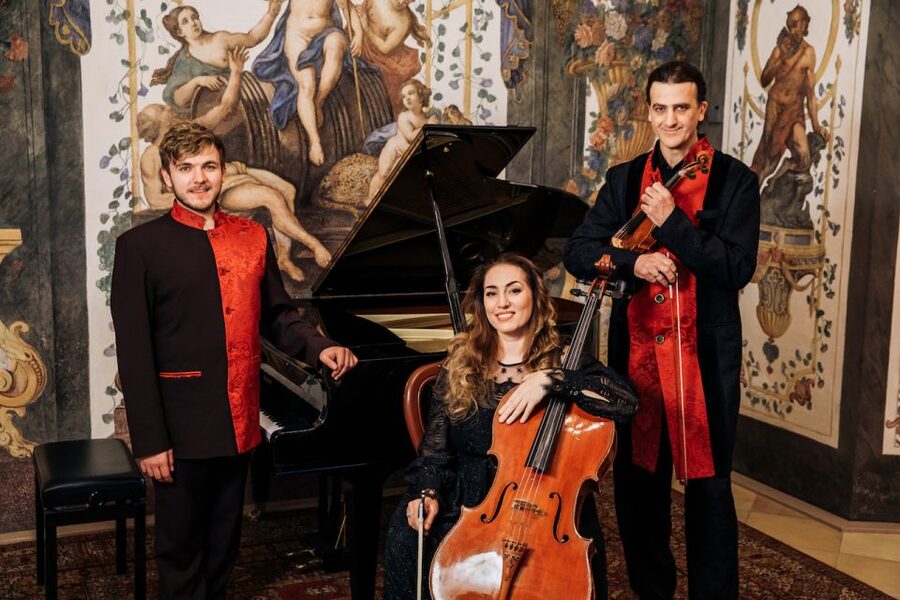
Book it if you want a convenient, polished classical concert near St. Stephen’s Cathedral, especially if the Sala Terrena and close seating appeal to you. The strongest reasons are the excellent reported acoustics, the expressive frescoes, the broad selection of composers, and the chance to hear named performers such as Claudio Bentes and Dushan Sretovic in a small setting.
Think twice if refreshments are important to your evening or if you prefer the scale of a major concert hall. For most visitors who want 90 minutes of recognizable music in a memorable central-Vienna venue, the $69 price is reasonable, provided you choose the seat category that fits your budget and arrive 15 minutes early.
FAQ
How long does the concert last?
The concert lasts 90 minutes.
How much does the concert cost?
The listed price is $69 per person.
Where is the concert held?
The venue is the Sala Terrena, entered through the gate at Deutschordenskirche. It is 150 meters from St. Stephen’s Cathedral.
When should I arrive?
You should arrive 15 minutes before the concert begins.
What music is performed?
The program includes works by Haydn, Beethoven, Mozart, Liszt, Chopin, Bach, Paganini, Saint-Saëns, Massenet, and Schubert. The listed pieces include Beethoven’s Moonlight Sonata, Liszt’s Un sospiro, Chopin’s Nocturne in C minor, Bach’s Cello Suite in G Major, and Schubert’s Trio in E-flat Major.
Are different ticket types available?
Yes. Student tickets, back-row tickets, and tickets closer to the performers are available.
Is the concert wheelchair accessible?
Yes, the experience is wheelchair accessible. English and German are available, and an English or German host or greeter is provided.
Just added around the world
- Zadar: Romantic Sunset Boat Tour with Champagne★ 4.9 · 11 reviews
- Weimar: Adventure Date, Walk with Quiz and Dinner for Couples★ 3.8 · 12 reviews
- Zakynthos: Romantic Sunset Tour & the Legend of the Dragon★ 5.0 · 4 reviews
- From Zadar: Romantic Sunset Sailboat Tour★ 5.0 · 5 reviews
- Vienna: Johann Strauss 200th birthday anniversary exhibition★ 4.7 · 3 reviews
- Vienna: Professional Proposal Photographer★ 5.0 · 8 reviews
- Anniversary & Destination Wedding Photo-shoot in Vienna★ 5.0 · 3 reviews
- Venice: Romantic Palace Dinner and Private Gondola Ride★ 4.7 · 6 reviews
Vienna Romantic Experiences, compared.
Johann Strauss 200th birthday anniversary exhibition
Read our review →
Wine Tasting in a 600 year historical wine cellar
Read our review →Browse the lists this tour appears in