
Review · AUSTRALIA
Romance & Glamour: Discover Melbourne’s true Italian food history
Food tells Melbourne’s story. This three-hour walk connects the Royal Exhibition Building with Carlton’s Italian cafes, showing how coffee, pasta, and immigrant enterprise became part of everyday Melbourne. I like the mix of serious research and simple pleasures: you learn about the city’s Italian food past, then taste coffee, a sweet treat, wine, and antipasto along the way.
I also like the small group limit of 10 people. That suits a history walk led by Dr Tania Cammarano, whose work focuses on Italian food culture in Australia. The main consideration is the weather. The experience requires good conditions, and you’ll be walking between stops, so this is not the right pick for a wet afternoon or for anyone seeking a seated food tour.
Key points at a glance
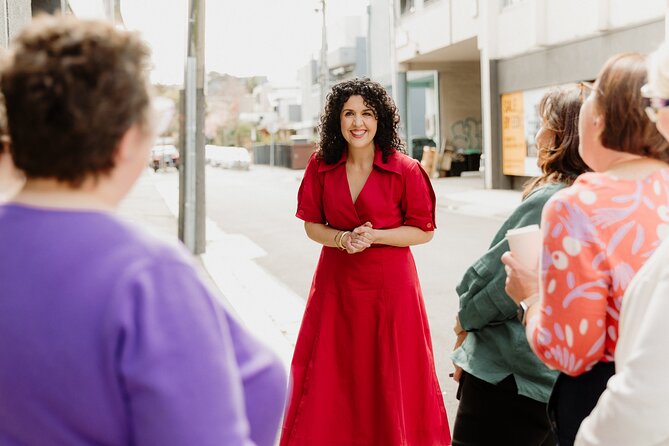
- Dr Tania Cammarano leads the walk: Her original research gives the tour a clear focus on how Italian food gained acceptance in Melbourne.
- The Royal Exhibition Building opens the story: This grand Carlton landmark has a direct connection to Melbourne’s Italian food history.
- The 1937 cookbook site adds a rare detail: You visit the Little Lonsdale Street location linked with Australia’s first Italian cookbook.
- Museo Italiano offers real objects: You’ll see an early espresso machine, restaurant plates, menus, and other Italian dining material from the 1920s.
- Food is built into the afternoon: The tour includes coffee and a sweet treat, followed by wine and a generous antipasto at University Cafe.
- The route ends on Lygon Street: You finish at 257 Lygon Street after moving from cultural history into Carlton’s long-running cafe scene.
Why Melbourne’s Italian food story is worth your afternoon
Melbourne’s affection for espresso and pasta can feel like an old local tradition. This walk asks where that affection came from, and who helped turn Italian food from an immigrant habit into a mainstream part of Australian life.
That question gives the tour more purpose than a simple cafe crawl. You are not just stopping for a coffee, then another plate of food. You are tracing the ideas, people, and businesses that helped shape public attitudes toward Italian cooking.
Dr Tania Cammarano is the central reason this experience works. Her subject is narrow enough to be focused, but broad enough to include migration, business, publishing, cafes, and changing ideas about Italy. The tour also looks at the difference between the Italy people imagined and the food Italians actually brought with them.
That focus helps bust a few familiar myths. The afternoon is about how Italian food was accepted, adapted, and promoted, not just about listing famous dishes. If you like food history with a social angle, you’ll get more from this than from a tour that simply points out popular restaurants.
The tone also appears relaxed rather than academic. The afternoon includes plenty of walking and explanation, but it is broken up by coffee, something sweet, a museum visit, and a final drink with food. That rhythm matters. Three hours of uninterrupted historical commentary can drag, while this format gives you regular pauses.
More Food and Drink Tours around the world:
- Romantic Wine Tasting Experience at Koccio Valletta
★ 4.5 · 259 reviews - Luxury Feluca on the NiLe with Food included( Romantic Trip)
★ 5.0 · 147 reviews - Wine tasting in a romantic castle with archaeologist guide
★ 4.7 · 25 reviews
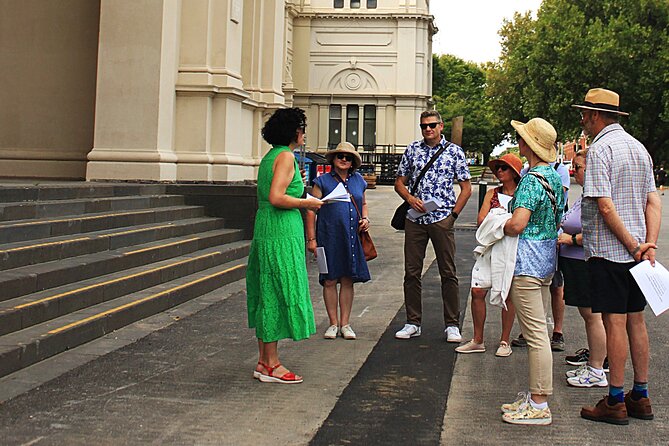
Starting at the Royal Exhibition Building
The meeting point is the Hochgurtel Fountain beside the Royal Exhibition Building and Melbourne Museum at 9 Nicholson Street, Carlton. The walk begins at 2pm, and the Royal Exhibition Building is more than a convenient landmark.
Here, Dr Cammarano explains why the building has a role in Melbourne’s Italian food story. The stop gives you a useful opening frame: Italian food history did not develop only inside Italian homes or restaurants. It was also shaped by public ideas about culture, national identity, food, and modern life.
You receive the wider context before moving into the streets. That is a smart choice. Without it, the later stops could feel like disconnected addresses. With it, you can better understand why a cookbook, an espresso machine, a cafe, or an old restaurant menu matters.
The first section lasts about 45 minutes. That is a substantial opening talk, so anyone hoping to start eating immediately should adjust expectations. This is a history walk with food, not a food tasting with a few historical comments.
The building is also a practical meeting point. The tour is near public transport, and the exact meeting location is clearly identified at the fountain. You should arrive ready to walk rather than expecting a coach or private transfer.
Little Lonsdale Street and the 1937 cookbook
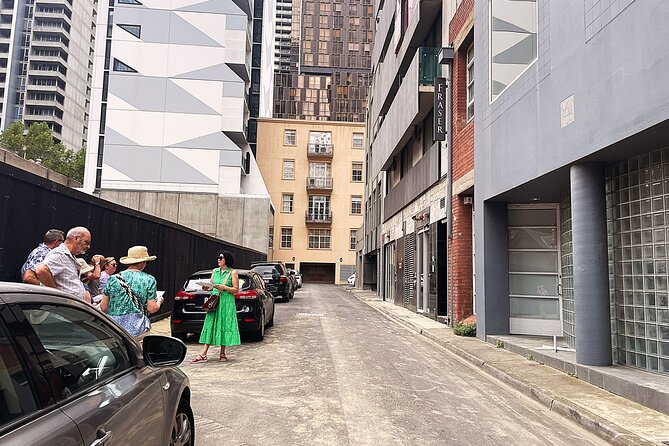
The next stop takes you to Little Lonsdale Street, where Australia’s first Italian cookbook was published in 1937. This is one of the most unusual details in the experience because it links food history with print culture and migrant initiative.
A cookbook can look ordinary today. In this setting, it becomes evidence of a community explaining its food to a wider audience. The publication date also gives the story a firm anchor. You are not dealing with a vague claim that Italian food has always been popular in Melbourne. You are looking at a particular place and year connected with the effort to present Italian cooking in Australia.
The stop lasts about 45 minutes. That suggests Dr Cammarano uses the location to discuss more than the cookbook itself. You’ll likely hear about the people and circumstances behind the publication, along with the larger question of how Italian food was introduced to the public.
This part should appeal to anyone interested in food as communication. Recipes do more than tell you how to cook. They can show which ingredients were available, which dishes a community wanted to preserve, and which foods it believed outsiders might accept.
There is no admission charge at this stop, and it is an outdoor location. The tradeoff is that the historical site may not look dramatic in the way a preserved building or museum does. You need to enjoy listening and imagining the past rather than expecting a large physical display.
Lygon Street, coffee, and early Italian entrepreneurs
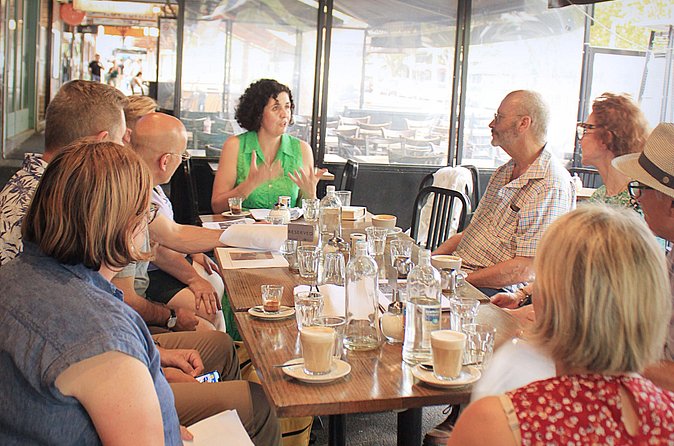
The walk then reaches Lygon Street for a coffee stop. The break lasts about 30 minutes and includes coffee and a sweet treat connected with Australia’s first Italian cookbook.
This is where the subject becomes especially tangible. Coffee is not just a refreshment here. It helps explain the habits and businesses that made Italian food feel familiar in Melbourne. You’ll hear about some of the city’s earliest Italian food entrepreneurs while sitting in the part of Carlton most closely associated with Italian dining.
I like this pause because it gives the group time to process the first half of the walk. You are not asked to hold every date and name in your head while crossing the city. You can stop, drink coffee, and connect the historical discussion with a food tradition that remains visible around you.
The sweet treat adds a small but meaningful link to the cookbook stop. It is not described as a large tasting, so you should not book this expecting a full pastry sampling or a long list of desserts. Think of it as a focused taste that supports the story.
Lygon Street is also the point where the tour may feel most familiar. Cafes and Italian restaurants are part of Carlton’s public identity, and that can make the history seem obvious. The value comes from learning how that identity developed, rather than simply admiring the finished result.
More Food Tours around the world:
- Greater Zion: Couples UTV Tour with Food
★ 5.0 · 3 reviews - Christmas illuminations in 2CV – With 2 Presents (Food + goodies)
★ 5.0 · 2 reviews
Museo Italiano and the evidence behind the stories
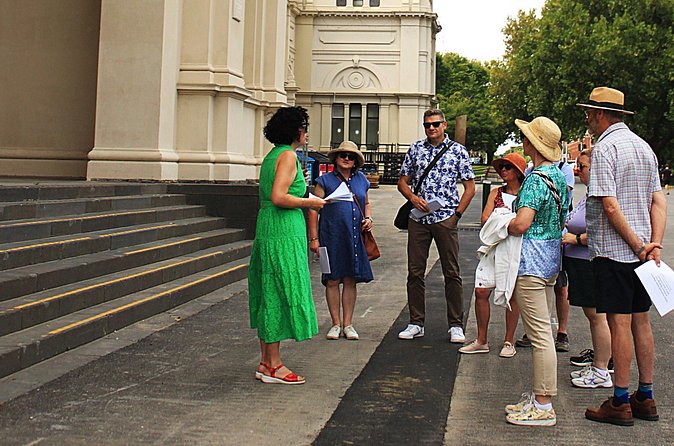
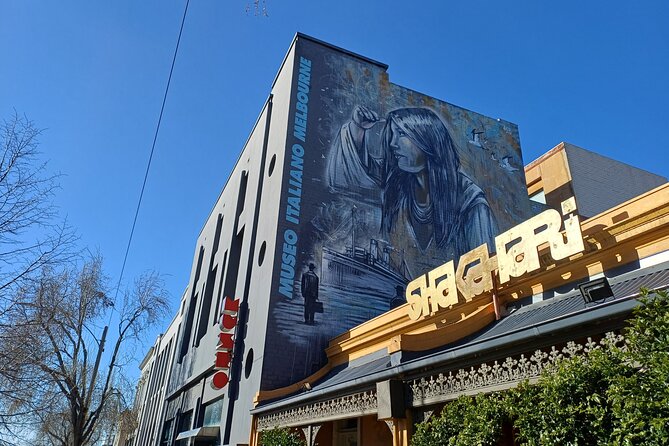
Museo Italiano provides the most direct look at physical objects from Melbourne’s Italian dining past. The visit lasts about 30 minutes and includes an early espresso machine, plates, menus, and other material linked with Italian restaurants from the 1920s.
This is a strong middle section because it gives you things to examine, not just stories to hear. A menu can reveal what restaurants served and how they presented themselves. Plates show the everyday side of dining. An espresso machine connects technology with the cafe culture that later became so familiar.
The museum stop also helps balance the walking route. You move from public landmarks and street addresses into a place where objects carry the history. If you enjoy small museums, ephemera, and the details of ordinary life, this may be your favorite stop.
The visit is listed as an included part of the experience, with no separate admission charge. The 30-minute limit keeps the afternoon moving, but it also means you will not have unlimited time to examine every item. You should listen closely to Dr Cammarano rather than trying to absorb the collection on your own.
This is also the point where the tour’s promise of busting myths becomes concrete. Old menus and restaurant objects can challenge the tidy version of food history. They show how food was presented at a particular time, and they may raise questions about authenticity, adaptation, and what Italian dining meant in early Melbourne.
University Cafe and a proper end to the afternoon
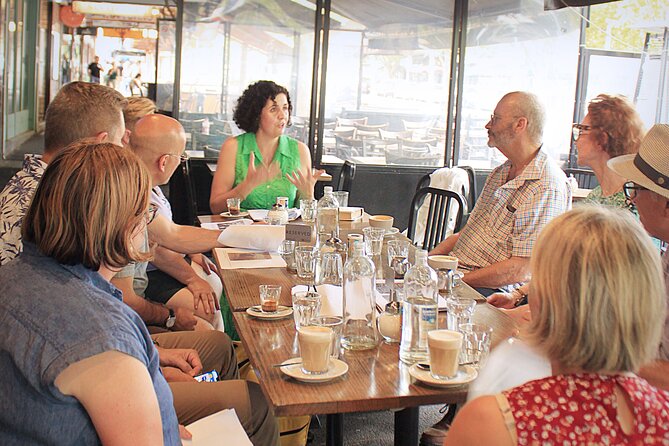
The final stop is University Cafe at 257 Lygon Street. Here, you share a glass of wine and a generous antipasto while the group discusses the afternoon.
I like this ending because it is social without being forced. You have spent the walk gathering information, and the final stop gives you a chance to compare impressions over food. The antipasto is described as generous, so it should feel like more than a token bite, although it is not presented as a full dinner.
The glass of wine also gives the tour a clear finish. After the museum and street history, you sit down at one of Carlton’s historic cafes and connect the past with the continuing cafe culture around you. The experience ends at the cafe rather than returning to the starting point, so you can remain in Carlton afterward for dinner or further exploring.
Keep in mind that the tour lasts about three hours and begins at 2pm. With the final stop, you finish in the late afternoon. That timing works well if you want an evening meal nearby, but it may not suit a tightly scheduled day with another fixed activity.
What the $89.66 price includes

At $89.66 per person, this is not the cheapest way to get a coffee and a plate of antipasto in Melbourne. The value depends on how much you want the explanation that connects those tastes.
The price includes expert commentary from Dr Cammarano, coffee, a sweet treat, entry into Museo Italiano, a glass of wine, and a generous antipasto. It also buys a small-group experience capped at 10 people. You are paying for access to a specialist-led story, not simply for the food.
I think the price is reasonable for someone who enjoys food history and wants more than a standard city walk. The museum entry and refreshments help, but the main value is the research and interpretation. If you only want to eat Italian food, you could spend less at a cafe and restaurant on your own.
The tour offers free cancellation up to 24 hours before the 2pm start time. Changes or cancellations made less than 24 hours before the experience are not refunded. Since the walk depends on good weather and a minimum number of participants, poor conditions or low enrollment can lead to a different date or a full refund.
Who will enjoy this walk most
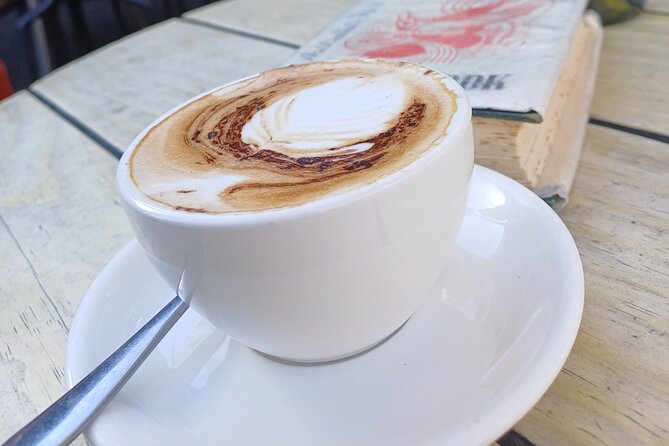
I would choose this experience if you like food as a doorway into culture. It suits people who want to understand how migration, business, publishing, and public taste shaped a city’s eating habits.
It is also a good fit for anyone with a particular interest in Italian cuisine, Melbourne cafes, or the history of Carlton. You do not need to be an expert, but curiosity will help. The experience has enough food to keep the afternoon enjoyable, while the main subject remains historical.
The small group should appeal to anyone who prefers a more personal walking tour. A maximum of 10 people makes it easier to hear the guide and ask questions than on a large city excursion.
I would be more cautious if you want a full meal, a long list of tastings, or a tour that stays indoors. The route includes outdoor walking, and the weather policy matters. The 45-minute sections at the Royal Exhibition Building and Little Lonsdale Street also mean you should be comfortable giving serious attention to the commentary.
Most people can participate, and service animals are allowed. The route is near public transport, but the supplied details do not specify the total walking distance or step-free access at every stop. If those details affect your plans, ask the provider before booking.
Should you book Romance & Glamour?
Book it if you want to know why Melbourne’s Italian food culture became part of daily life, not just where to find pasta and coffee. Dr Tania Cammarano’s focused research, the 1937 cookbook connection, the Museo Italiano objects, and the final wine and antipasto make this a thoughtful half-day introduction to Carlton.
Skip it if you prefer a fast-moving tasting tour or need a weather-proof activity. The strongest parts are the stories, the specialist guide, and the way each taste supports the history. For food lovers, curious walkers, and anyone who enjoys seeing familiar streets with better context, the $89.66 price is justified.
FAQ
Where does the Italian food history walk start?
The walk starts at Hochgurtel Fountain beside the Royal Exhibition Building and Melbourne Museum, 9 Nicholson Street, Carlton VIC 3053.
What time does the experience begin?
The start time is 2pm.
Where does the tour finish?
The walk ends at University Cafe, 257 Lygon Street, Carlton VIC 3053.
How long does the experience last?
The experience lasts approximately three hours.
What food and drinks are included?
The experience includes coffee and a sweet treat, followed later by a glass of wine and a generous antipasto.
Is museum admission included?
Yes. Entry into Museo Italiano is included in the experience.
What happens if the weather is poor?
The experience requires good weather. If it is canceled because of poor conditions, you’ll be offered a different date or a full refund.
More History and Heritage Tours around the world
- Verona by Moonlight: A Nighttime Path Through History and Romance
★ 4.0 · 10 reviews - Romantic history tour of Belgrade
★ 5.0 · 8 reviews - Romance Etched in Stone – A Heritage walk among Temples of Bhubaneswar
★ 5.0 · 2 reviews - Vienna: Wine Tasting in a 600 year historical wine cellar
★ 5.0 · 2 reviews
Just added around the world
- Zadar: Romantic Sunset Boat Tour with Champagne★ 4.9 · 11 reviews
- Weimar: Adventure Date, Walk with Quiz and Dinner for Couples★ 3.8 · 12 reviews
- Zakynthos: Romantic Sunset Tour & the Legend of the Dragon★ 5.0 · 4 reviews
- From Zadar: Romantic Sunset Sailboat Tour★ 5.0 · 5 reviews
- Anniversary & Destination Wedding Photo-shoot in Vienna★ 5.0 · 3 reviews
- Vienna: Johann Strauss 200th birthday anniversary exhibition★ 4.7 · 3 reviews
- Vienna: Professional Proposal Photographer★ 5.0 · 8 reviews
- Venice: Romantic Palace Dinner and Private Gondola Ride★ 4.7 · 6 reviews
Australia Romantic Experiences, compared.
Hunter Valley Romantic Bubbly Breakfast Helicopter Tour from Cessnock
Read our review →
The Romance Package (Bell Tower tour for 2 people, plus personalised Love Lock)
Read our review →
Broome: Romantic 45-Min Private Helicopter Flight & Beach Picnic
Read our review →
Adelaide Couples Tour: Penfolds(World #2) Visit Hahndorf & Lunch
Read our review →
Lyndoch: Barossa Valley Helicopter Flight & Romantic Picnic
Read our review →
Browse the lists this tour appears in