
Review · LISBON
Lisbon Trendy Downtown – From Romantic Chic to Postmodern Glamour
Lisbon reveals itself one storefront at a time. This private walking tour links Baixa and Chiado through earthquake history, old coffeehouses, unusual shops, grand squares, and small architectural details. I like the way it goes beyond the usual postcard stops, especially the doll hospital and tiny Luvaria Ulisses. I also like that a professional photographer joins the guide, so you can focus on the city while someone helps record the day.
The main consideration is time. Ten stops in roughly three to four hours means you will keep moving, and some places receive only 10 or 15 minutes. The tour is best for people who want a lively introduction to central Lisbon rather than long visits inside museums or churches. The minimum booking is two people, and the activity is private, so only your own group takes part.
The quick facts that matter most
- A private route through Baixa and Chiado: You move with your own group, not a large mixed crowd.
- The 1755 earthquake shapes the whole walk: Praça do Comércio and the rebuilt downtown give the tour a strong historical thread.
- A professional photographer comes along: The experience includes help with vacation photos as you walk.
- Odd little shops are part of the appeal: You pass the Hospital for Dolls and the tiny Luvaria Ulisses.
- The final stop is Praça Luís de Camões: The tour ends in a lively square at the entrance to Baixa and Chiado underground station.
- The price is $29.64 per person: Since the stops are free, you are paying mainly for the guide, private format, photography, and focused storytelling.
Why Baixa and Chiado work so well together
Lisbon’s downtown is easy to read once you understand its two personalities. Baixa is the planned, rebuilt center, with broad squares and orderly streets shaped after the 1755 earthquake and tsunami. Chiado feels more literary and fashionable, with old bookstores, cafés, department stores, and reminders of Lisbon’s artistic life.
This route gives you both in one sitting. You begin beside the river at Estação Ferroviária do Sul e Sueste and finish at Praça Luís de Camões. That makes the walk useful early in a Lisbon visit, since you get an overview of several central areas before deciding where to return on your own.
I especially like the attention to details. The guide points out tiles on buildings and pavements, decorative evidence above shopfronts, and signs showing how one business once occupied a different space. These small clues can be easy to miss when you walk alone. Luis is specifically associated with this detailed approach, including architecture, tiles, old shops, and the stories behind them.
The private format also changes the rhythm. You can ask about a building or stop briefly for a photo without holding up a large party. Still, the precise pace depends on your guide and group. With ten stops, you should expect a broad survey rather than a slow examination of every interior.
More Romantic Experiences around Lisbon:
- Romantic Photoshoot Experience for Couples in Lisbon
★ 4.9 · 78 reviews - Private Romantic cruise with sparkling wine- 2-Hour- Lisbon
★ 4.9 · 52 reviews - Private Tour Romantic Sintra, Cabo da Roca & Cascais
★ 5.0 · 51 reviews
Praça do Comércio and Lisbon’s rebuilt center
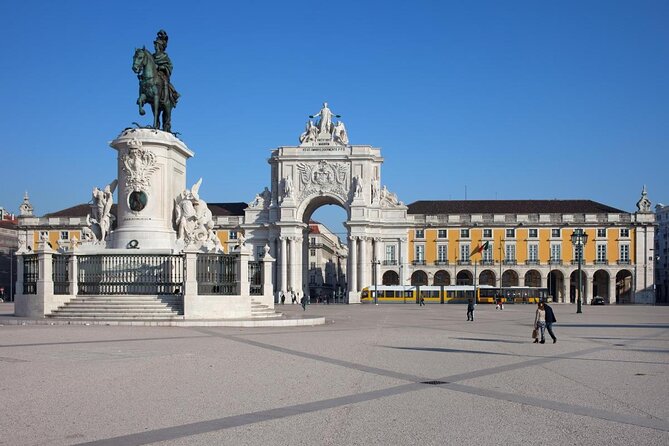
The first stop is Praça do Comércio, also called Terreiro do Paço. This grand riverside square was rebuilt after the 1755 disaster, with its yellow buildings, monumental sculptures, and open view toward the water.
You have about 20 minutes here, enough to understand the square’s scale and hear why it matters. The phrase Royal Square fits its former role, while the present layout shows how Lisbon rebuilt its center in a more controlled form after catastrophe. The scenic pier adds another angle, giving you a clear sense of the square’s connection to the river.
This is a strong opening because it provides context for nearly every later stop. Once you know that much of central Lisbon was redesigned after the earthquake and tsunami, the straight streets and formal squares make more sense.
There is no admission charge, but that does not mean the stop lacks value. The guide’s explanation is what turns a public square into a readable piece of urban history. Bring comfortable shoes and be ready for open sun or weather, since this is an outdoor start.
Santa Justa and the downtown landmarks of the 1800s
The next stop is the Elevador de Santa Justa, one of Lisbon’s most recognizable structures. The tour uses the lift as a doorway into the city after the 1755 disaster and into the 19th-century versions of downtown life.
You have about 15 minutes here. That is enough for an exterior look and an explanation, but not necessarily a leisurely ride or extended visit. The advertised experience does not include a ticket for the elevator, so treat this as a guided sightseeing stop rather than a guaranteed ride.
The nearby references are part of the charm. Pastelaria A Camponesa and Animatógrafo help connect the grand iron lift with everyday food, entertainment, and old city habits. I like this mix of major landmark and less obvious names. It gives you more to look for when you return to the area.
This is also a good place for the photographer to work. Santa Justa’s structure provides a clear Lisbon backdrop, although the short stop means you may need to be ready when the guide suggests a photo.
Rossio and Praça da Figueira, two useful city squares
Praça Dom Pedro IV, usually known as Rossio, receives about 15 minutes. It is described as the most popular square in town, framed by 18th-century buildings and the National Theater. Its wave-pattern pavement is one of those details that can disappear underfoot if you are rushing.
The historic coffee shops matter here too. They connect the square to Lisbon’s social life, not just its architecture. If you enjoy cities through cafés, paving patterns, façades, and public meeting places, this section should suit you well.
Next comes Praça da Figueira, also for about 15 minutes. The focus shifts from monumental space to unusual shopping. The most memorable stop is the Hospital for Dolls, an eccentric shop that gives the tour some personality.
This is one of the best examples of the route’s character. You are not only checking off major sights. You are being shown the small commercial details that make central Lisbon feel specific. The guide can point out original shops and explain what they reveal about the district.
If you are traveling with children, the doll shop may be a highlight. Children must be accompanied by an adult, and the child rate applies only when sharing with two paying adults. The tour itself is not built as a children’s program, but the unusual shop gives younger visitors something concrete to watch for.
Same place, a slower evening:
- Romantic Private Sailboat in Lisbon for couples
★ 5.0 · 38 reviews - Romantic Sunset Sailing Experience in Lisbon
★ 5.0 · 33 reviews - Lisbon Private Romantic 2h Cruise with sparkling wine-Day/Sunset
★ 5.0 · 24 reviews - Lisbon: Romantic Cruise with Wine & Portuguese Tapas
★ 5.0 · 12 reviews
São Domingos and a darker side of the city
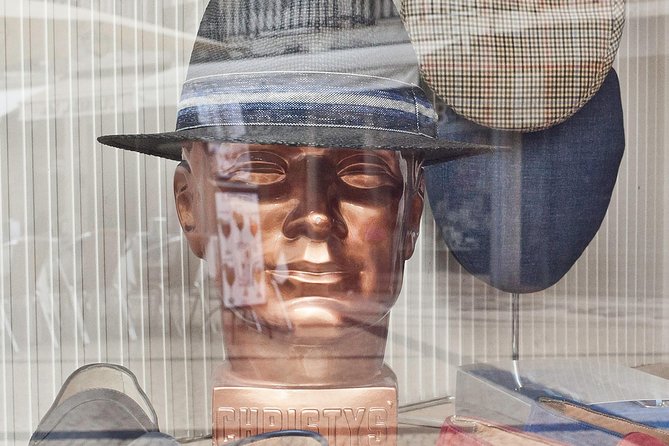
Igreja de São Domingos brings a sharper mood. Its façade looks imposing, while the interior ruins are described as overwhelming. The churchyard also has a masonic connection, adding another layer to the stop.
You have about 15 minutes here, so the visit is mainly about looking, listening, and understanding the site’s character. The word ruins matters. This is not simply another polished church interior. The damage and surviving structure create a more somber experience than the grand squares nearby.
Just around the corner, the route points you toward cherry liqueur. Alcoholic drinks are not included, but they may be available for purchase. That gives you the option to sample a local specialty, though you should budget separately and avoid assuming a tasting is part of the tour price.
This stop shows why a guide can add value in Lisbon. A quick solo glance might register an old church. A good explanation can help you notice the contrast between the majestic façade, damaged interior, and neighboring traditions.
Luvaria Ulisses and the shops inside old Lisbon
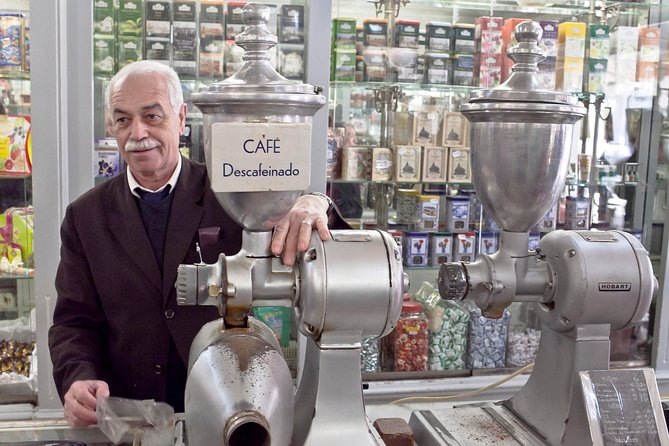
The tour then moves toward Luvaria Ulisses, a famously tiny glove shop set directly into the massive Carmo Wall. Its size is part of the story. You will likely remember it not because it is large or ornate, but because it uses such a small space in such a clever way.
The route also includes Grandes Armazéns, described as having a Parisian character and rebuilt after a destructive fire in 1988. This gives you another look at how Lisbon’s retail districts have changed over time.
The contrast is useful: one shop preserves an intimate old format, while the department-store area reflects a larger commercial past and later rebuilding. You get a compact lesson in shopping, fire, adaptation, and urban memory.
The stop lasts about 15 minutes. Do not expect a long shopping session. Instead, listen for the clues in the façades and shop layouts. The guide’s style is strongest when explaining how a building’s decoration shows what it once was.
Armazéns do Chiado and the memory of department stores
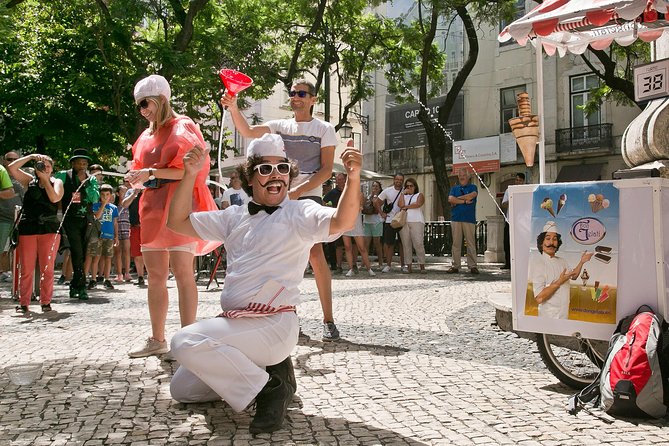
Armazéns do Chiado continues the retail theme. The route recalls former department stores and businesses including Antigos Armazéns Grandella, Chiado, Paris em Lisboa, and Ramiro Leão.
This is a good section for anyone interested in the way city neighborhoods change without losing every trace of the past. Department stores once served as major destinations, and the names still help map that earlier commercial world.
You spend about 15 minutes here. The stop is less about one famous monument and more about reading the district as a record of business, fire, rebuilding, and changing taste. I find that kind of sightseeing more useful than a list of dates because it gives you a way to look at the streets after the tour ends.
The photographer can also capture the larger streetscape here. Since the tour includes a professional photographer guide, you are not limited to quick phone snapshots taken while walking.
Bertrand and Brasileira on Lisbon’s literary street

Bertrand is the next major highlight. It is identified as the oldest bookstore in the world, and its presence helps explain why this part of Lisbon became such a cosmopolitan street after the 1755 earthquake.
You have about 20 minutes here, one of the longer stops. That extra time makes sense because the route pairs the bookstore with Brasileira, a famous coffeehouse associated with artists and writers for the last century.
This is perhaps the most appealing section for readers, writers, and café lovers. The guide connects books, coffee, architecture, and public life instead of treating them as separate subjects. You can see how a street becomes known not just for buildings, but for the people who use them.
The wording of the experience does not promise a long bookstore visit or a reserved table at the café. Think of these as guided points of interest. If one catches your attention, save it for a return visit after the walk.
Fernando Pessoa and the feel of literary Lisbon
The sculpture of Fernando Pessoa continues the literary theme. The stop lasts about 15 minutes and focuses on Lisbon’s legendary coffeehouses, writers, and intellectuals.
Pessoa’s sculpture is a natural meeting point between public art and literary memory. You are not simply looking at a statue. You are being shown how Lisbon remembers its writers in everyday streets and café settings.
This part should appeal to you if you prefer cultural context to a checklist of monuments. It also gives the photographer another recognizable downtown setting. The tour’s photo service is especially useful here because posed pictures around a statue or café can be awkward when you are managing your own phone.
The guide’s historical approach matters most at this point. A short explanation about writers and coffeehouses can make a familiar street feel more personal and specific.
Praça Luís de Camões, the romantic finish
The final stop is Praça Luís de Camões, with about 10 minutes devoted to the square. It represents Romantic Lisbon and is now one of the liveliest meeting places in the center.
This is a fitting end because the route moves from earthquake planning and royal grandeur toward literature, romance, cafés, and modern city life. You finish at the entrance of the Baixa/Chiado underground station, which is practical if you plan to continue exploring.
The official end point is Praça Luís de Camões, not the starting station. Keep that in mind when arranging your day. Since the walk ends in a central area, you can continue on foot, use public transportation, or return to a shop or café that caught your eye.
What the $29.64 price really buys you
At $29.64 per person, this is a modestly priced private experience for a three to four-hour walk. The public sights themselves are free, so the value rests in the guide’s interpretation, the private setup, and the professional photographer.
I would consider it good value if you care about context and want more than directions between landmarks. You are paying to notice details: tiles, former shop uses, old department-store names, church ruins, literary cafés, and the way the city rebuilt itself.
The price is less compelling if you want paid attractions, extended indoor visits, food, or drinks included. Nothing in the package covers meals, beverages, alcoholic drinks, or entry charges that might apply elsewhere. Group discounts may be available, which could improve the cost for a larger booking.
The tour has a five rating from four published reviews, but that is a small sample. The praise centers on Luis’s ability to explain architecture, tiles, shopfront evidence, and local history. One French-language account describes the experience as a useful history lesson and notes the purchase of music boxes at the Hospital for Dolls. Those details suggest a guide who responds well to curiosity rather than rushing through a script.
Who should book this Lisbon walk?
I would choose this tour if you want:
- A private introduction to Baixa and Chiado
- Lisbon history explained through streets and buildings
- Unusual shops alongside famous landmarks
- A guide who pays attention to tiles and architectural clues
- Professional vacation photos during the walk
- A route that ends near central public transportation
It should suit couples, families with adults, and small groups who prefer a personal guide. It also fits a first or second day in Lisbon, when you want to learn the layout before exploring alone.
You may want another type of activity if you dislike walking, need long stops at each attraction, or want food and drinks included. The route is also not designed around full museum visits. It is a moving overview with short, focused stops.
Booking confirmation arrives at the time of booking. Most people can participate, and the route is near public transportation. You can cancel for a full refund up to 24 hours before the start time. Inside that window, the payment is not refunded, and changes are not accepted.
Should you book Lisbon Trendy Downtown?
Book it if the details of a city interest you as much as its famous sights. The strongest parts are the 1755 rebuilding story, the unusual shops, the literary stops, and the guide’s close attention to tiles, façades, and former businesses. The photographer adds a useful extra, especially if you want more than self-timer photos.
Skip it if your priority is a slow visit inside major attractions or an included food experience. For a reasonable price, this gives you a private, well-shaped introduction to central Lisbon, with enough odd corners and historical context to make the city easier to understand afterward.
FAQ
Where does the tour start?
It starts at Estação Ferroviária do Sul e Sueste, at Av. Infante Dom Henrique 1B, 1100-016 Lisboa, Portugal.
Where does the tour end?
The tour ends at Praça Luís de Camões, at the entrance of the Baixa/Chiado underground station.
How long does the walking tour last?
The experience lasts approximately three to four hours.
Is the tour private?
Yes. Only your group participates in the activity.
Is a photographer included?
Yes. A professional photographer guide is included, along with a local guide and professional guide.
Can I cancel for a full refund?
Yes. You can cancel at least 24 hours before the start time for a full refund. Cancellations or changes made within 24 hours are not accepted for a refund.
Just added around Lisbon
- The Visionary Romantic Sintra Experience★ 5.0 · 5 reviews
- Marriage proposal on a Vintage Sailboat★ 5.0 · 4 reviews
- Sintra Romance and Mystery Private Tour★ 5.0 · 9 reviews
- Romantic Sintra, Cabo da Roca and Charming Cascais full day Private Tour★ 5.0 · 5 reviews
- Fairy-Tale Romantic Sintra & Fishermen Village Cascais Highlights★ 5.0 · 2 reviews
- Lisbon: Romantic Cruise with Wine & Portuguese Tapas★ 5.0 · 12 reviews
- Lisbon: Couples’ Silver Jewelry Workshop with Local Artisans★ 5.0 · 6 reviews
- Romantic Sunset Sailing Experience in Lisbon★ 5.0 · 33 reviews
Lisbon Romantic Experiences, compared.


Private Romantic cruise with sparkling wine- 2-Hour- Lisbon
Read our review →
Private Tour Romantic Sintra, Cabo da Roca & Cascais
Read our review →


Lisbon Private Romantic 2h Cruise with sparkling wine-Day/Sunset
Read our review →
Browse the lists this tour appears in